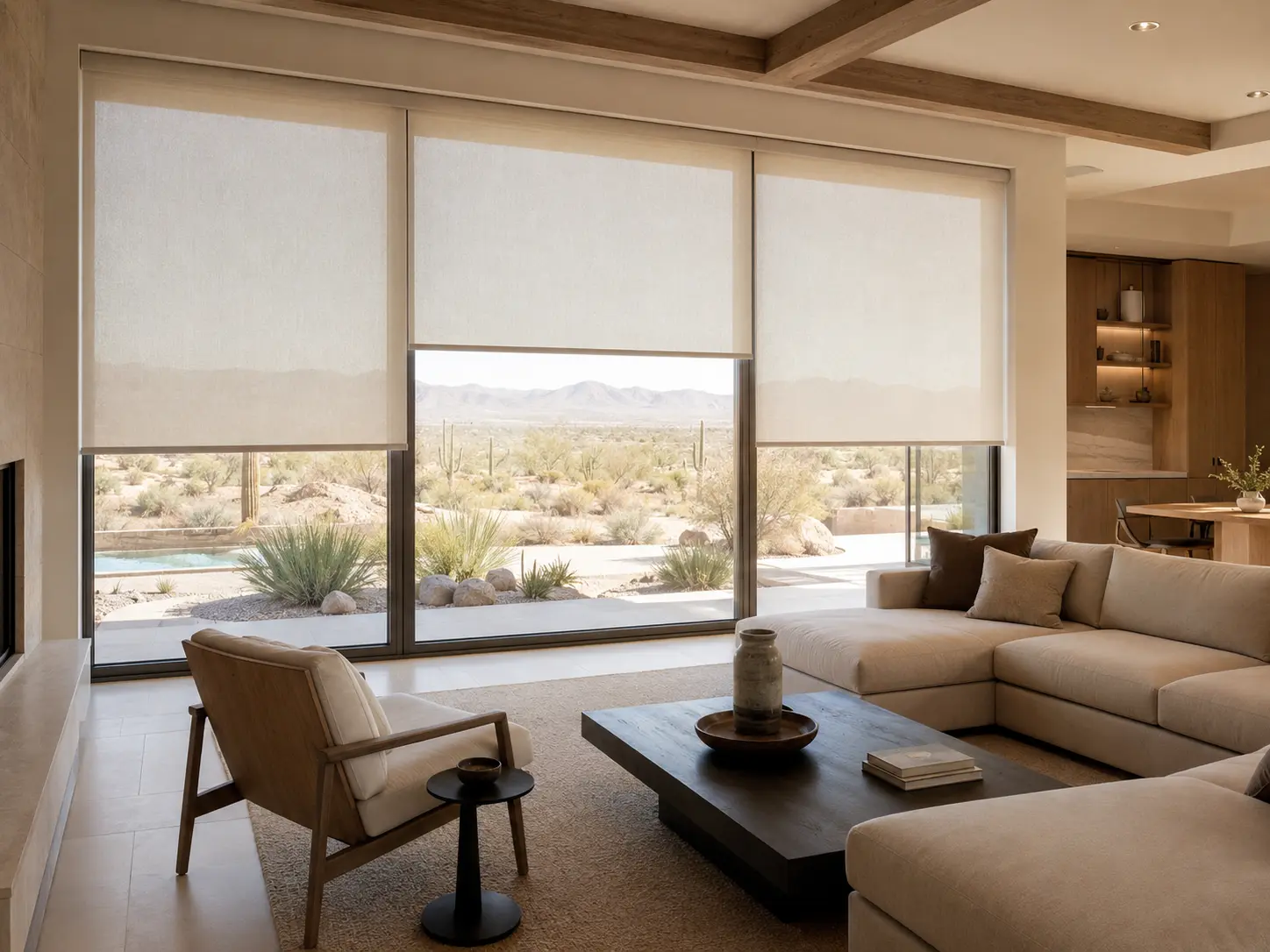
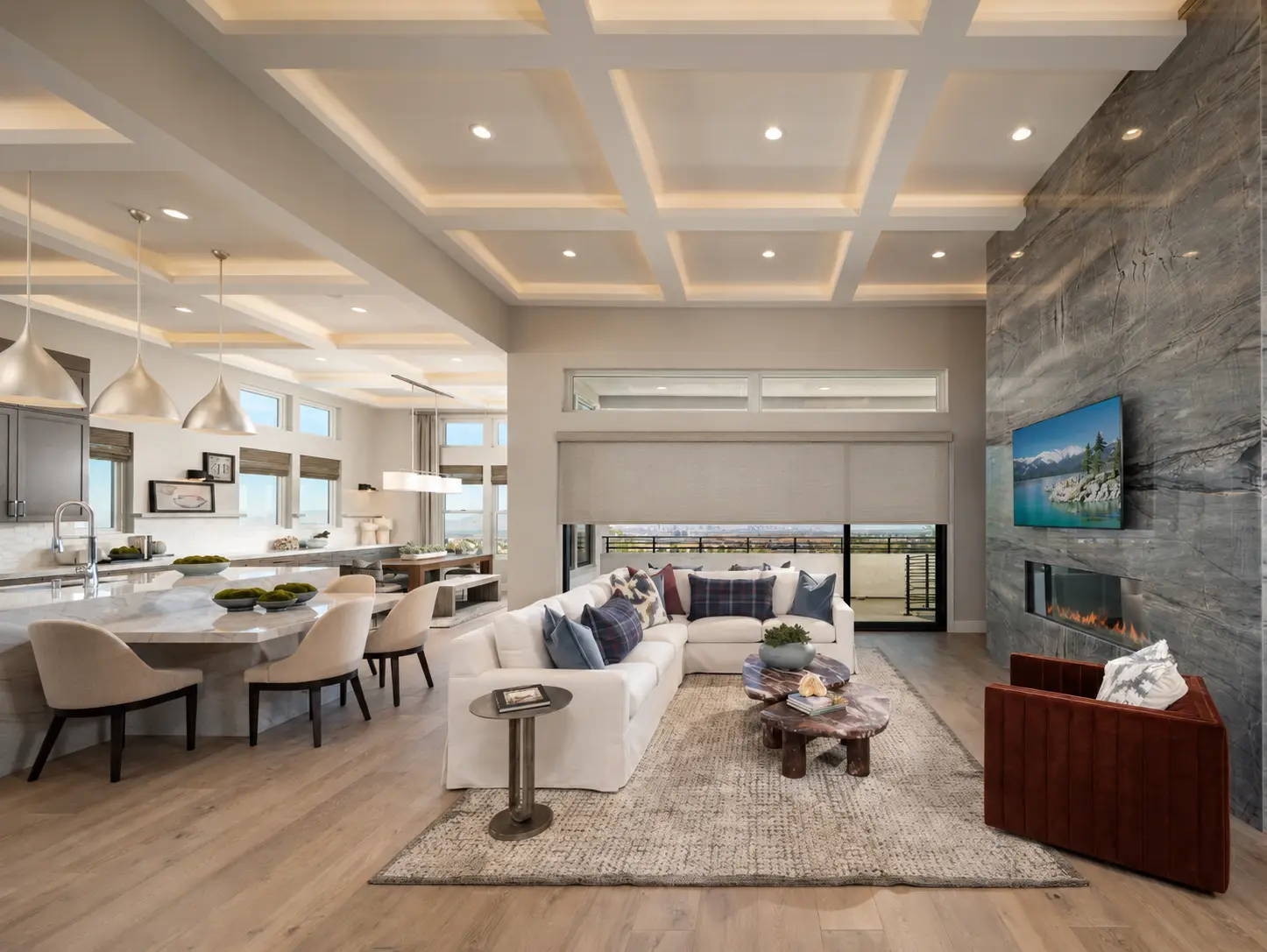
Las Vegas has strong sunshine throughout the year, but the sun's path, daylight length, and the time direct light reaches a particular window still change. Household routines change too. A shade schedule should be treated as an adjustable room setting, not a permanent rule.
Watch the room, not only the calendar
Note when glare reaches a television or desk, when direct light crosses seating, and when exterior darkness changes privacy. West-facing groups often need the most attention, but south, east, reflected, and high-rise exposures can create their own seasonal patterns.

Know which events adjust automatically
Sunrise- and sunset-based events may follow changing daylight when the bridge or platform supports location-based scheduling. Fixed-time events do not. Even solar events may need an offset because the useful close time is rarely the exact moment of sunset.
Confirm that the bridge or automation platform is set to the Las Vegas location and correct local time. A router replacement, account migration, prolonged outage, or platform update can affect location and clock settings even when the shade motors still respond to local remotes.
Good times to review schedules
- When afternoon glare begins reaching a new part of the room
- After daylight-saving or time-zone setting changes
- Before an extended trip or seasonal vacancy
- When school, work, sleep, or guest routines change
- After furniture, television, art, or room use changes
- When privacy timing no longer matches exterior darkness
Preserve simple manual control
A seasonal event should never make the room difficult to use. Keep a familiar remote or wall control available, and confirm whether a manual change is temporary or whether it disables the next scheduled event.
Keep a stable baseline
Record the schedule before making large changes. Adjust one event, observe it for several days, and keep the names of rooms and groups consistent. If the platform supports sunrise offsets and separate seasonal scenes, use only the complexity the household will maintain.