 Las Vegas Motorized Shades
Motorized drapery & patio-door treatments
A softer architectural layer for wide glass and everyday movement.
Custom drapery on a powered track can bring quiet, coordinated movement to sliding doors, broad window walls, bedrooms, and design-led rooms where fabric should frame the architecture.
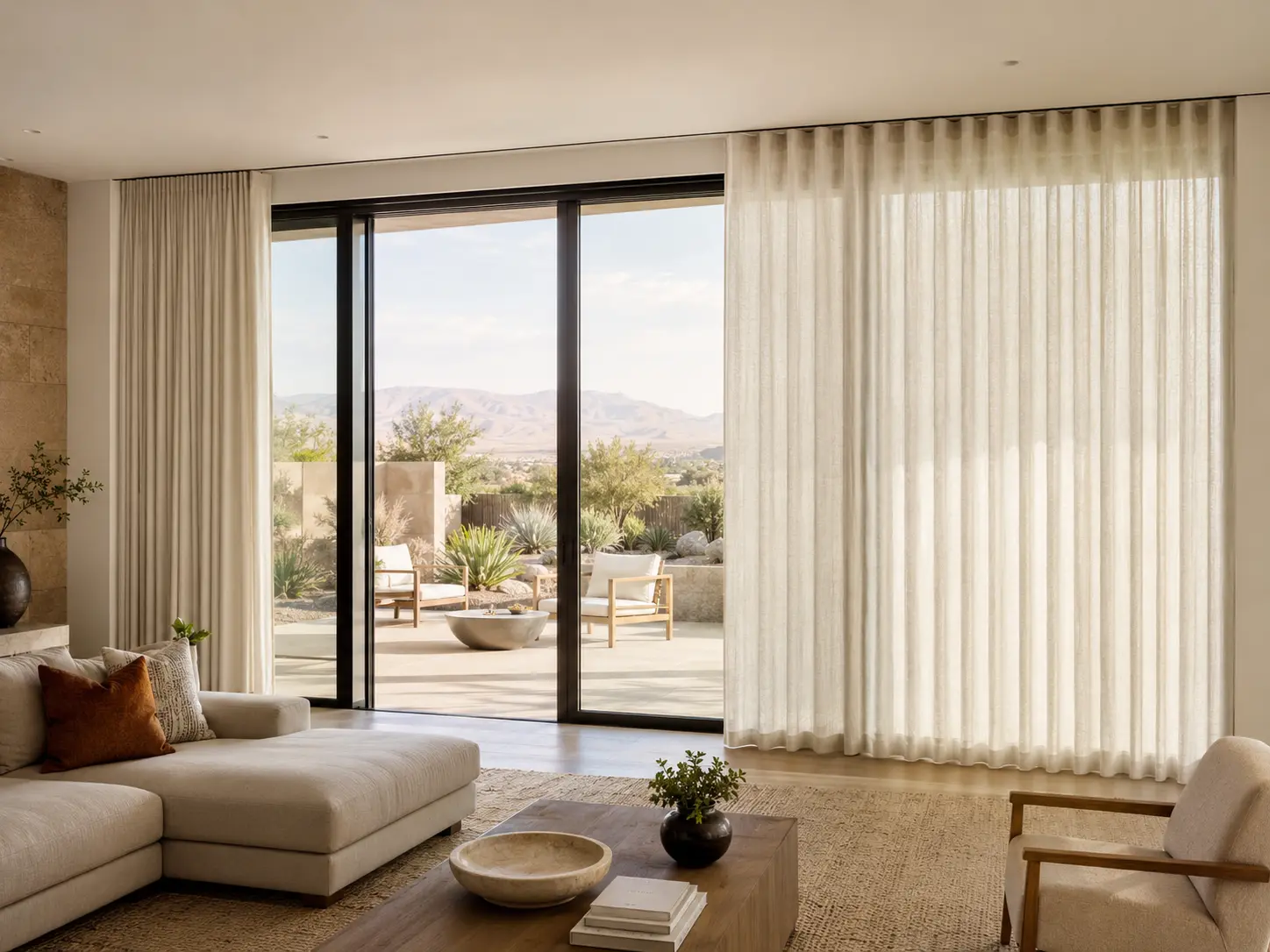 Preliminary inspiration · final product confirmed in your home
Our point of view
Motorized Drapery & Patio-Door Treatments should solve the room—not merely add a motor.
Motorized drapery is most compelling when it solves both scale and atmosphere. It can traverse a large opening without pulling fabric by hand, create a graceful stack, and coordinate with lighting or shade scenes when the system supports it. The track, heading, draw direction, fullness, lining, floor relationship, and available power all shape whether it feels effortless or overbuilt.
Why consider motorized drapery
What this direction can bring to the home.
Made for broad openings
Powered tracks can make wide doors and window walls easier to use while maintaining a continuous fabric composition.
A softer room
Drapery can improve acoustics, add depth, and visually connect windows with furnishings and architecture.
Custom light control
Sheer, lined, and room-darkening directions can be designed alone or as a layered system.
Flexible stacking
One-way, split, or selected stacking directions may protect access and views when they are planned around the room.
The track is architecture
Plan the system before choosing only the fabric.
Ceiling conditions, brackets, pockets, power, controls, stack space, door operation, and service access determine how refined the installation can be. Early coordination is especially important in new construction or remodels.
Heading and fullness
Ripple fold and pleated directions create different rooms.
Ripple-fold drapery creates a consistent wave suited to many contemporary interiors. Pleated styles bring a more tailored or traditional structure. Fabric weight and fullness affect movement, stack, and the amount of material required.
Layering with purpose
Sheer and lined treatments can divide the work.
A sheer layer can soften daylight while a lined layer provides evening privacy or darkness. Layered motorization adds hardware and planning, so each layer should solve a real need.
Room-by-room thinking
Where motorized drapery may make the most sense.
These are starting points. Window conditions, fabric, exposure, power, and daily use still determine the final direction.
Sliding patio doors
Preserve access while giving broad glass a finished fabric frame.
Great rooms
Coordinate tall or wide openings with softer architecture and grouped movement.
Primary bedrooms
Combine room-darkening direction with scheduled or bedside control.
Media rooms
Consider lined fabric where light control and acoustic softness both matter.
Before you choose
Design the ownership experience too.
Ask how the shades are powered, controlled, recharged or serviced; what happens if a motor or control stops responding; and who supports the system after installation. Exact answers belong to the selected product—not a generic promise.
Explore easy-recharging considerations →A useful comparison
Need easier movement with less visible fabric?
A roller shade or vertical sheer direction may use less stacking space and create a quieter architectural profile across wide glass.
Compare roller shades →Straight answers
Questions about motorized drapery.
Can motorized drapery work on a sliding glass door?
It can be a strong direction when the track, stack, draw direction, door access, power, and mounting structure are planned correctly. The opening must be measured in person.
What is ripple-fold drapery?
Ripple fold uses carriers and heading tape to create a consistent wave along a track. It tends to feel cleaner and more contemporary than many traditional pleated styles.
Can drapery connect to lighting or shade scenes?
Compatible powered tracks may participate in remotes, schedules, keypads, or home-control scenes. The exact motor, interface, and control platform must be confirmed together.
See the difference at your windows
Compare real materials, controls, and movement in your home.
Your designer brings relevant samples, reviews the rooms, confirms the technical details, and provides the exact plan and price.