 Las Vegas Motorized Shades
Motorized roller shades
The cleanest path to everyday motorized shade control.
A quiet architectural silhouette, broad fabric possibilities, and an operating experience that can stay as simple—or become as connected—as the room requires.
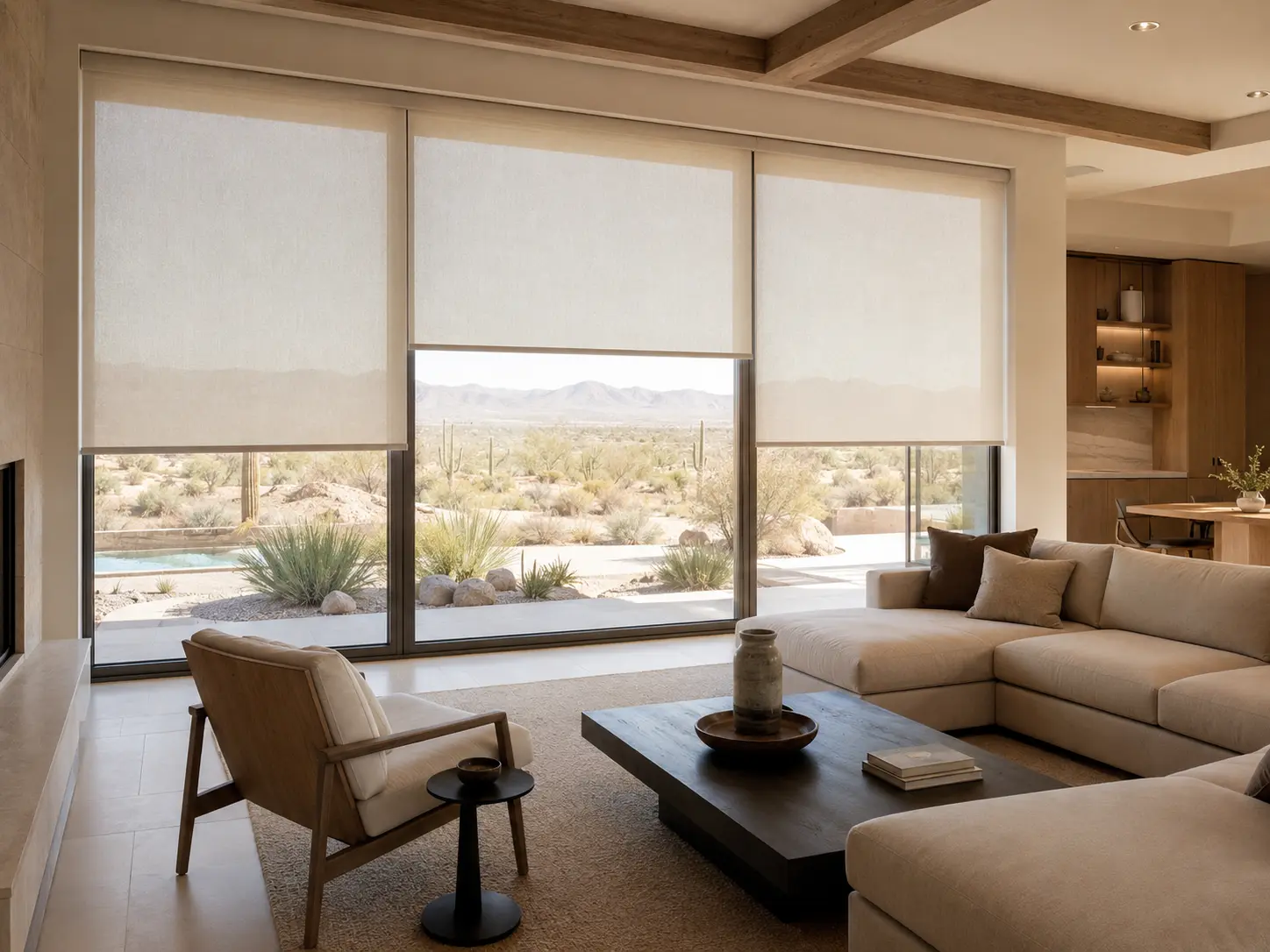 Preliminary inspiration · final product confirmed in your home
Our point of view
Motorized Roller Shades should solve the room—not merely add a motor.
Motorized roller shades are often the first product we explore because they solve several problems without asking the window treatment to become visually heavy. The real design work is choosing the right fabric performance, roll direction, top treatment, power approach, and control experience for the room.
Why consider roller shades
What this direction can bring to the home.
A restrained silhouette
The shade can visually recede so architecture, furnishings, and the view remain central.
Useful fabric performance
Solar, light-filtering, privacy, and blackout directions let the same product family solve different room goals.
Grouped movement
Multiple shades may operate together for wide glass, banks of windows, and large connected rooms.
Control without complexity
A remote can remain the everyday tool, with schedules or integration considered only when they add value.
Fabric changes everything
The motor is only one part of the decision.
Openness, color, privacy, glare control, nighttime appearance, and the view through the fabric may matter as much as the motor. Your designer compares real fabrics in the actual light before anything is finalized.
Power and access
Plan ownership before installation.
Rechargeable, battery, plug-in, or hardwired directions depend on the selected system and conditions at the window. High windows and concealed installations deserve special attention because future access affects ownership.
The finished top
Hardware should feel intentional.
Roll direction, fascia, cassette, pocket, alignment, and mounting conditions shape the finished look. These details are reviewed and measured in person rather than assumed online.
Room-by-room thinking
Where roller shades may make the most sense.
These are starting points. Window conditions, fabric, exposure, power, and daily use still determine the final direction.
Great rooms
Coordinate large windows and manage strong daily sun.
Primary bedrooms
Combine blackout direction with convenient schedules.
Wide doors
Operate broad openings without wrestling with fabric.
High windows
Make difficult windows useful while planning future access.
Before you choose
Design the ownership experience too.
Ask how the shades are powered, controlled, recharged or serviced; what happens if a motor or control stops responding; and who supports the system after installation. Exact answers belong to the selected product—not a generic promise.
Explore easy-recharging considerations →A useful comparison
Need more softness or insulation?
Cellular and Roman shades bring different visual and performance qualities. The right comparison starts with the room—not a product ranking.
Compare cellular shades →Straight answers
Questions about roller shades.
Can roller shades provide blackout?
Blackout fabric can greatly reduce light, but gaps, mounting method, and the surrounding architecture affect the result. Your designer should review the room and set realistic expectations.
Do motorized roller shades require a smart home?
No. A dedicated remote may be enough. App control, schedules, and integrations are optional layers whose availability depends on the selected motor and interface.
Can several shades move together?
Grouped operation is commonly considered for banks of windows, but the final capability depends on the selected control system and project configuration.
See the difference at your windows
Compare real materials, controls, and movement in your home.
Your designer brings relevant samples, reviews the rooms, confirms the technical details, and provides the exact plan and price.