The shade motor
The selected motor determines which control paths may be available.
 Las Vegas Motorized Shades
Solution · voice control
Voice control can make motorized shades feel natural, but the voice assistant is only the final layer. The selected motor, control interface, network, room names, and scenes all need to work together first.
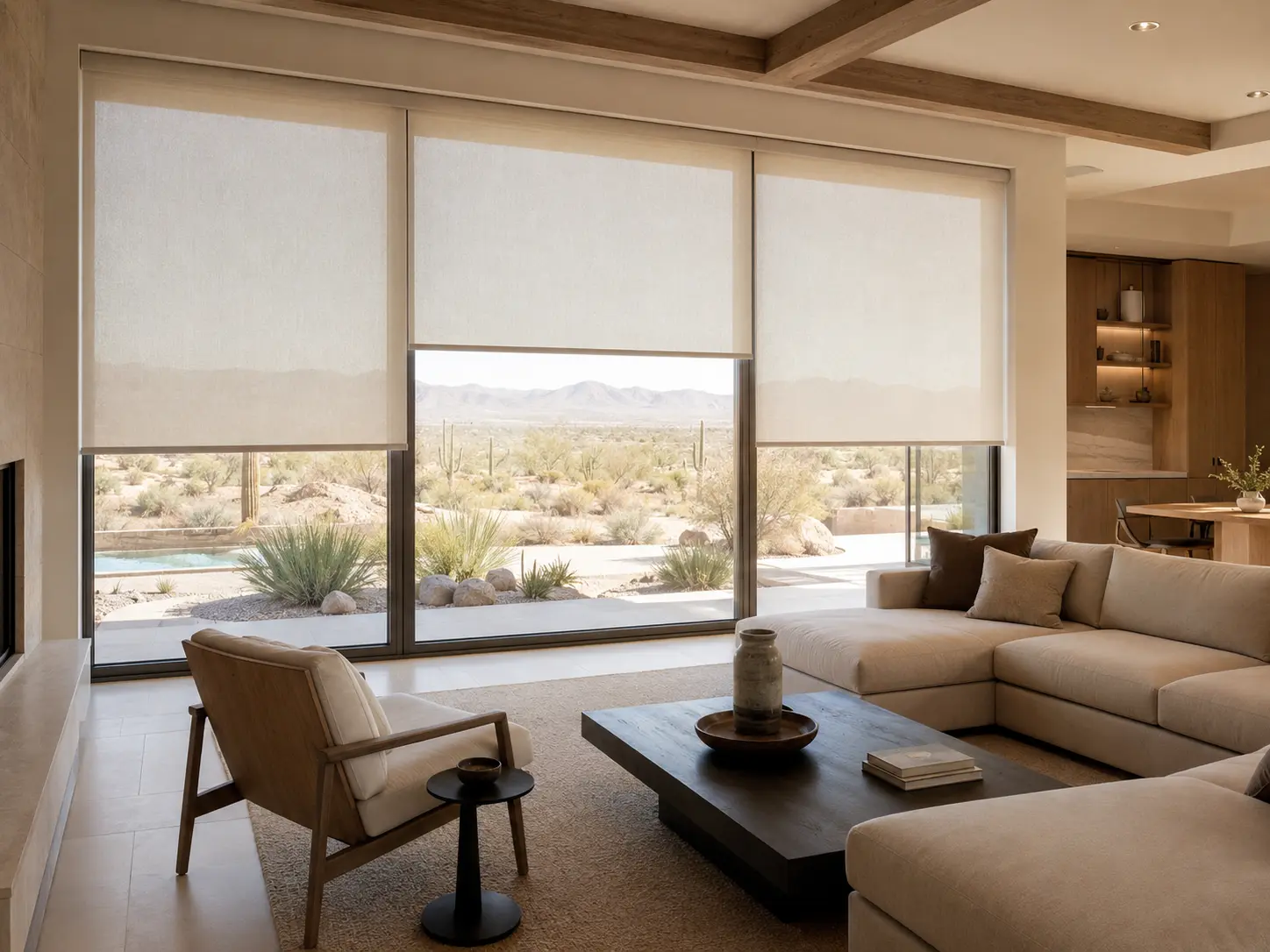
The guiding principle
How the solution fits together
The selected motor determines which control paths may be available.
A bridge, hub, gateway, or compatible controller may be required, depending on the product.
Your voice or smart-home platform must be explicitly supported by the chosen interface.
A dedicated remote should still make the shades easy to operate when voice is inconvenient.
“Close the west shades,” “open the bedroom,” or a named scene may be more useful than trying to control every individual shade by voice. Clear room names and grouped behavior matter.
Alexa, Google Home, Apple Home, Control4, Crestron, Savant, and other platforms do not automatically work with every motor. Exact compatibility must be confirmed before purchase.
The shades should remain usable if the internet is unavailable or someone does not want to speak a command. The right control design gives people more than one comfortable way to operate them.
Questions worth asking
Straight answers
No. Compatibility depends on the exact motor, interface, and current platform support.
It can supplement one, but a dedicated remote is often the most dependable and inclusive everyday control.
Scene capability depends on the chosen platform and integration. Confirm the desired behavior before selecting the system.
Design the experience before selecting the system
Your in-home designer can review the windows, narrow product directions, and confirm which questions require a motor or automation specialist.