Southwest Blinds & ShuttersLas Vegas Motorized Shades

Compare motorized window coverings

Start with the room. Then choose the product.

No single motorized treatment is best everywhere. Compare how each category looks, handles light, fits the opening, and asks to be owned before narrowing the exact system.

See the comparison Schedule a designer

Four decisions working together

The covering, motor, power, and control plan must agree.

A beautiful fabric does not guarantee the right motor. A familiar remote does not guarantee smart-home compatibility. Your designer considers the product construction, window size, power access, daily control, mounting, and long-term service as one design problem.

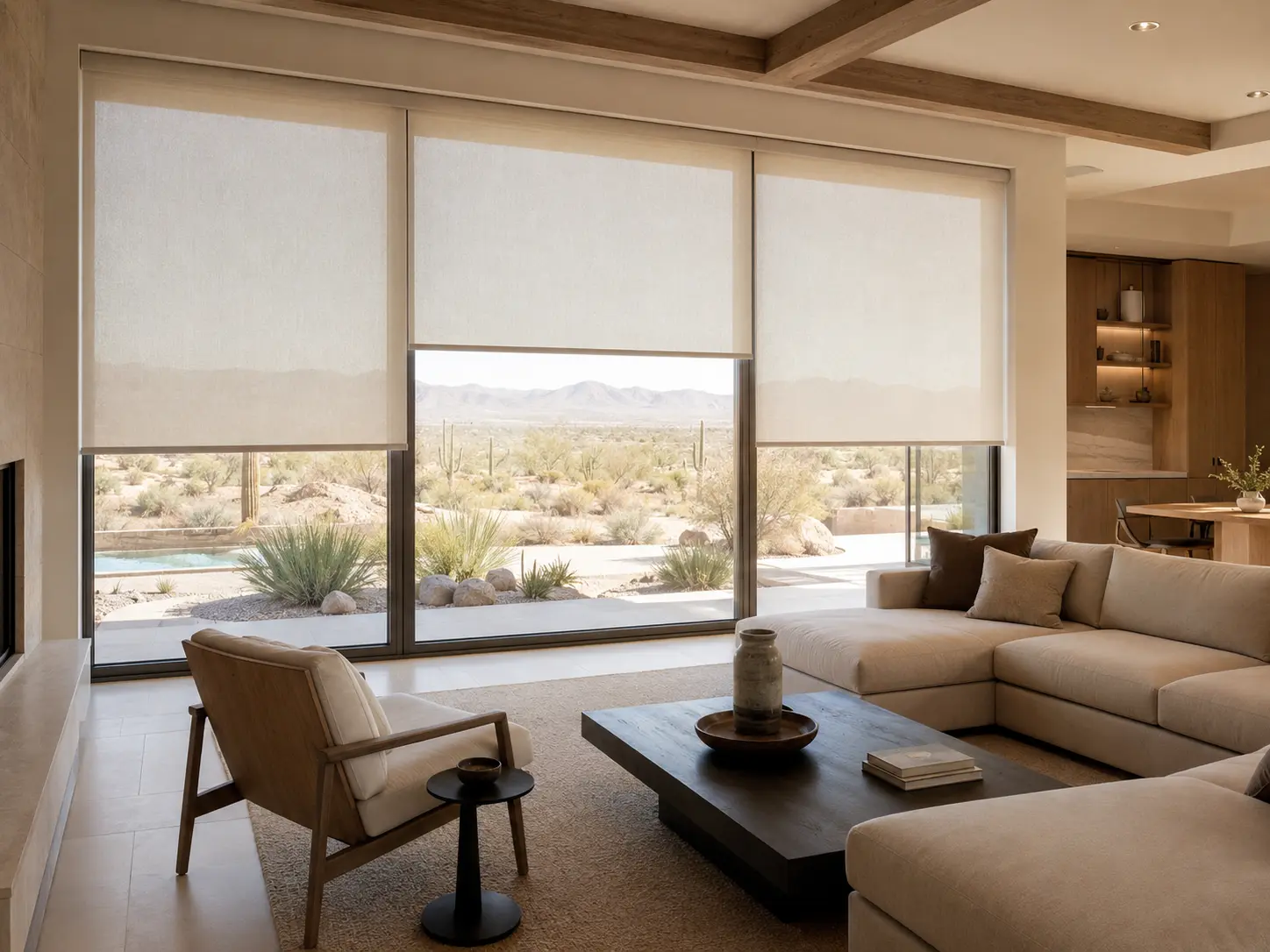
Minimal motorized roller shades in a modern room

Product direction

Roller shades

Often best for
Broad glass, glare, schedules, clean architecture
Design feel
Quiet and minimal
Light approach
Solar, filtering, privacy, or room-darkening fabrics
Important tradeoff
Fabric and edge gaps determine view and darkness
Explore roller shades
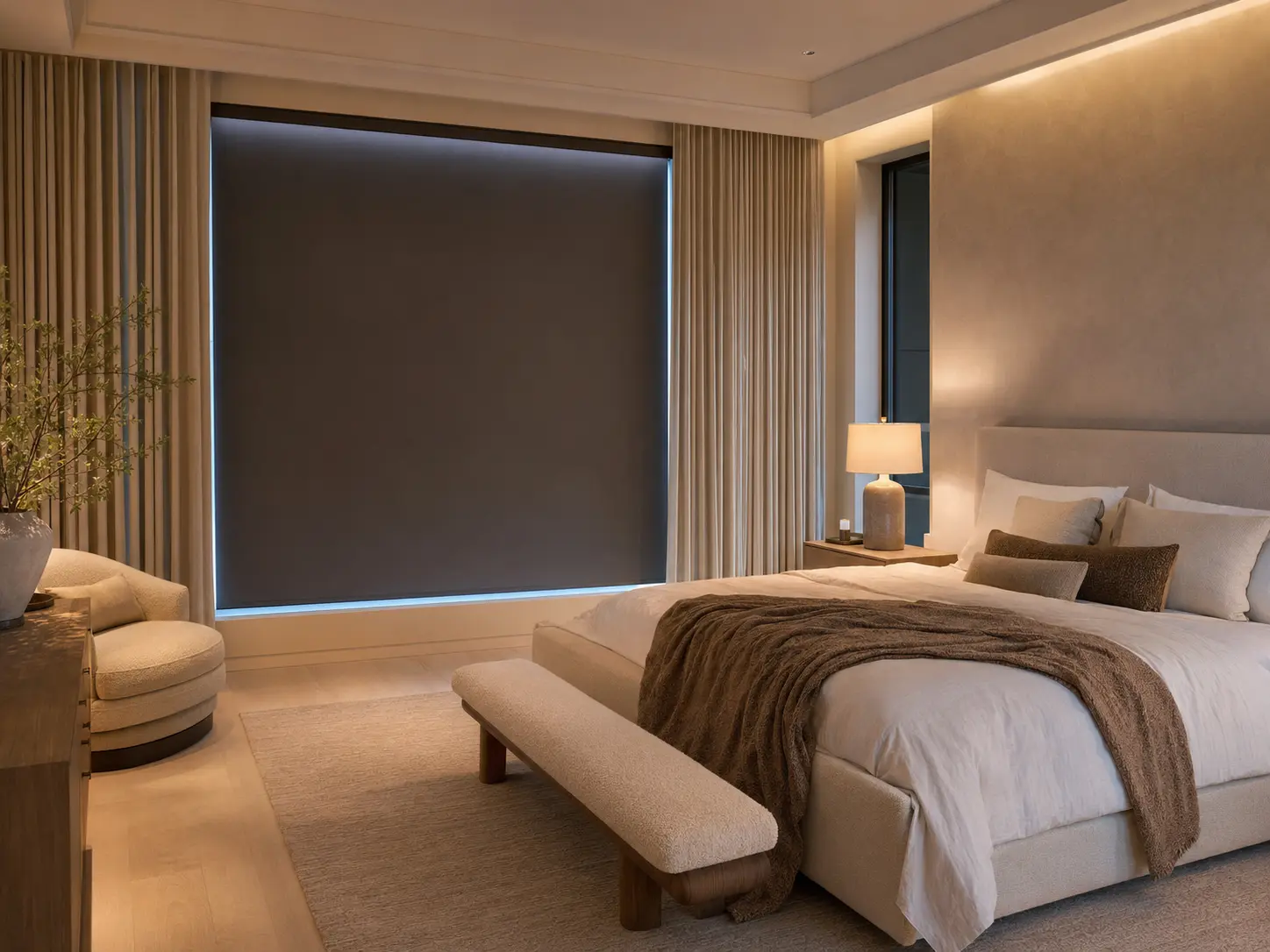
Soft motorized cellular shade in a bedroom

Product direction

Cellular shades

Often best for
Bedrooms, privacy, compact windows, comfort
Design feel
Soft and tailored
Light approach
Filtering or room-darkening directions
Important tradeoff
Does not preserve a view while lowered
Explore cellular shades
Warm motorized Roman shade in a furnished room

Product direction

Roman shades

Often best for
Dining rooms, bedrooms, design-led spaces
Design feel
Decorative and furniture-like
Light approach
Depends on fabric and lining
Important tradeoff
Creates a visible fabric stack
Explore roman shades
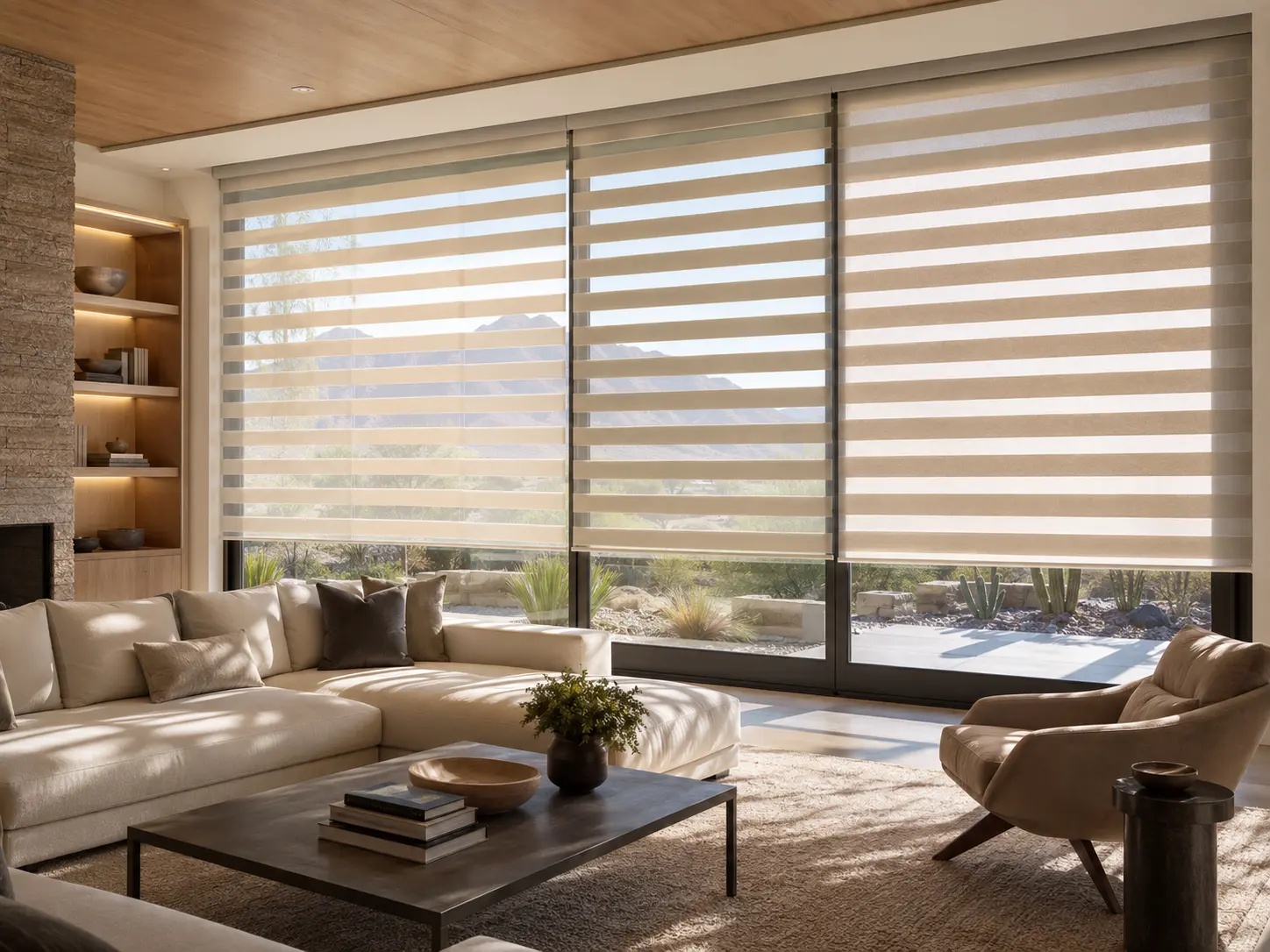
Motorized zebra shades with alternating sheer and opaque bands

Product direction

Sheer & zebra shades

Often best for
Filtered views, changing privacy, modern rooms
Design feel
Layered and softly graphic
Light approach
Bands or vanes adjust filtered view and privacy
Important tradeoff
Nighttime privacy and alignment require review
Explore sheer & zebra shades
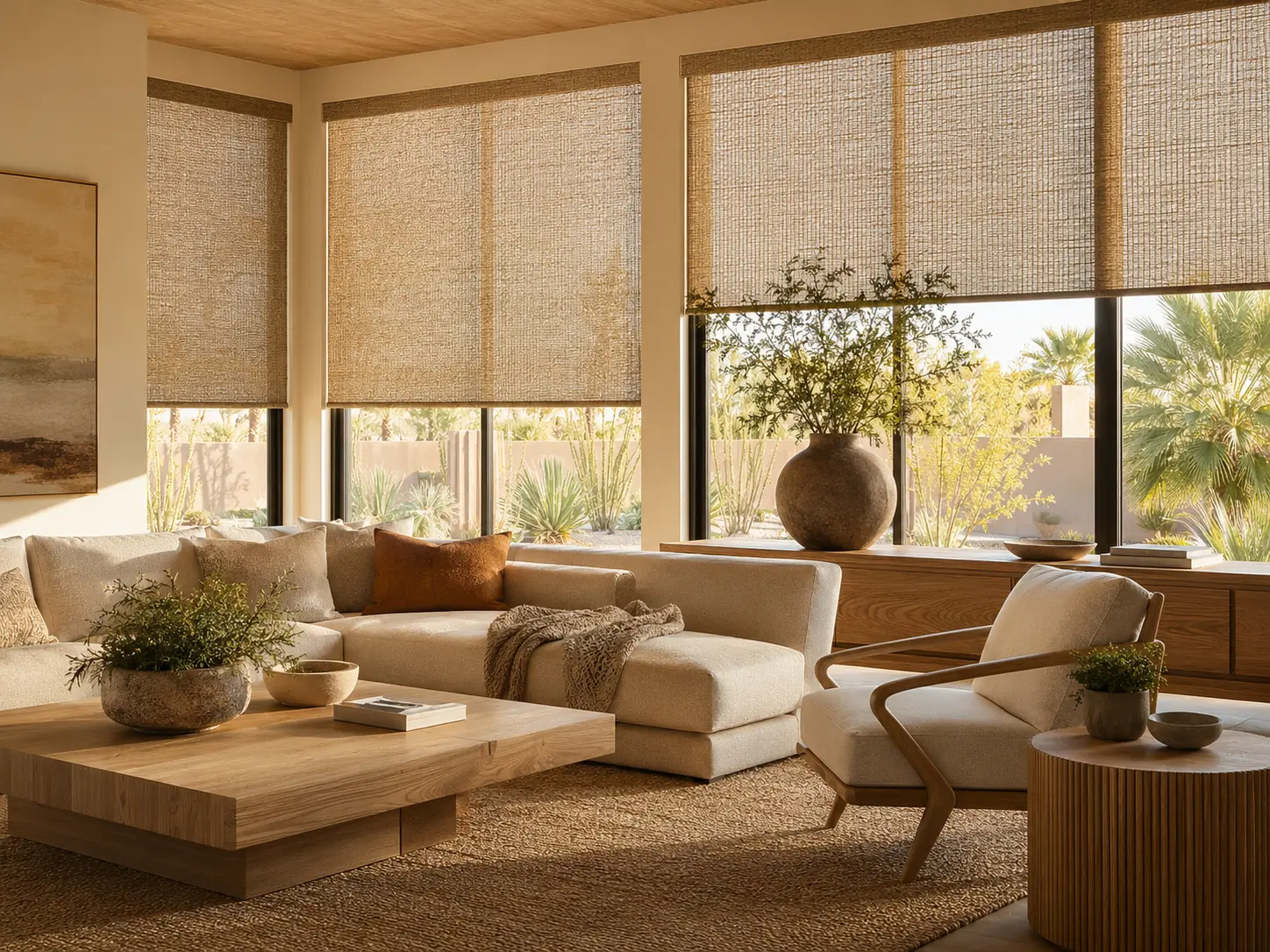
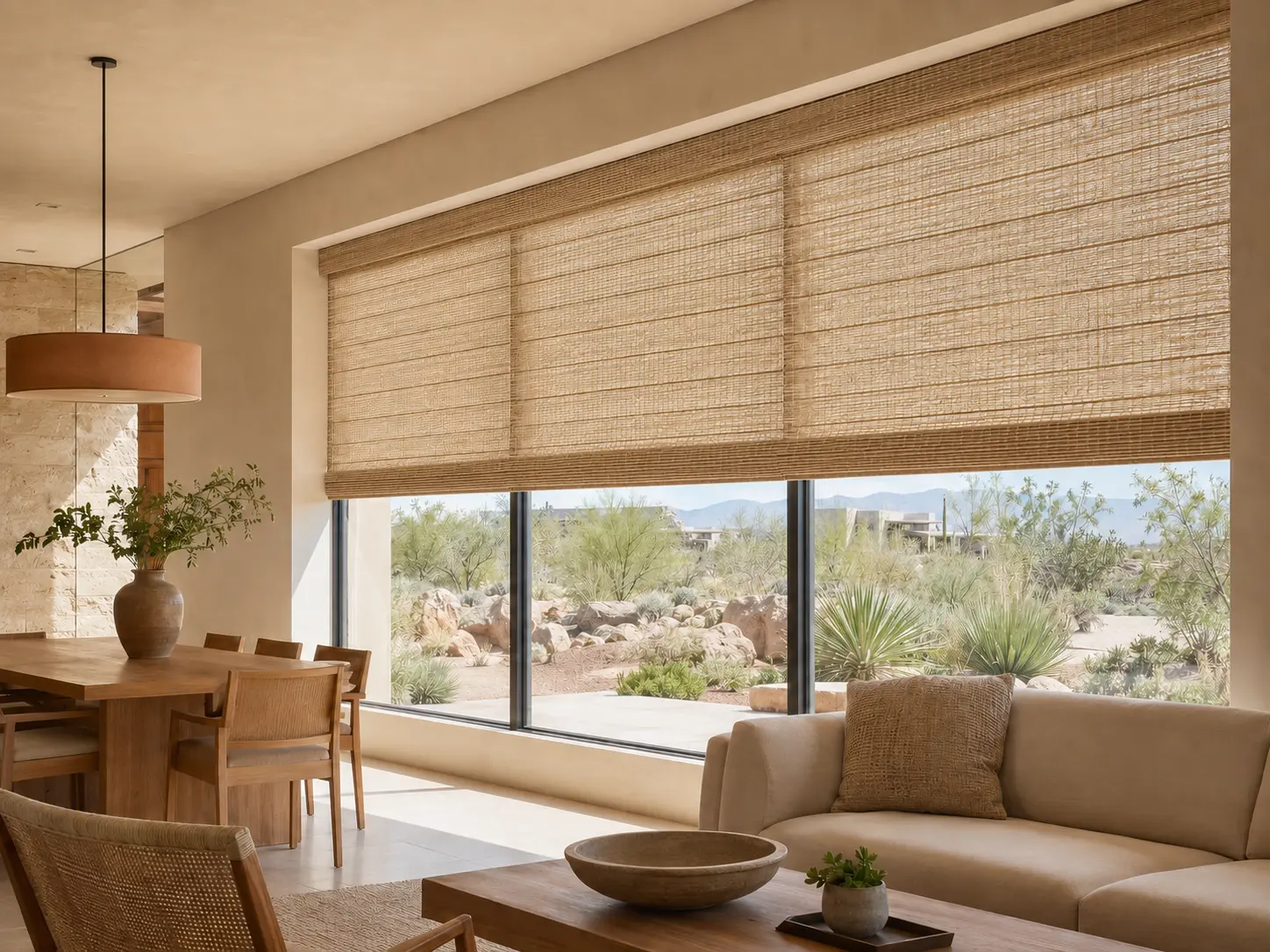
Motorized natural woven shades with organic fiber texture

Product direction

Natural woven shades

Often best for
Warm interiors, texture, dining and bedroom spaces
Design feel
Organic and collected
Light approach
Open weave, lined privacy, or room-darkening directions
Important tradeoff
Natural variation and gentle care are part of ownership
Explore natural woven shades
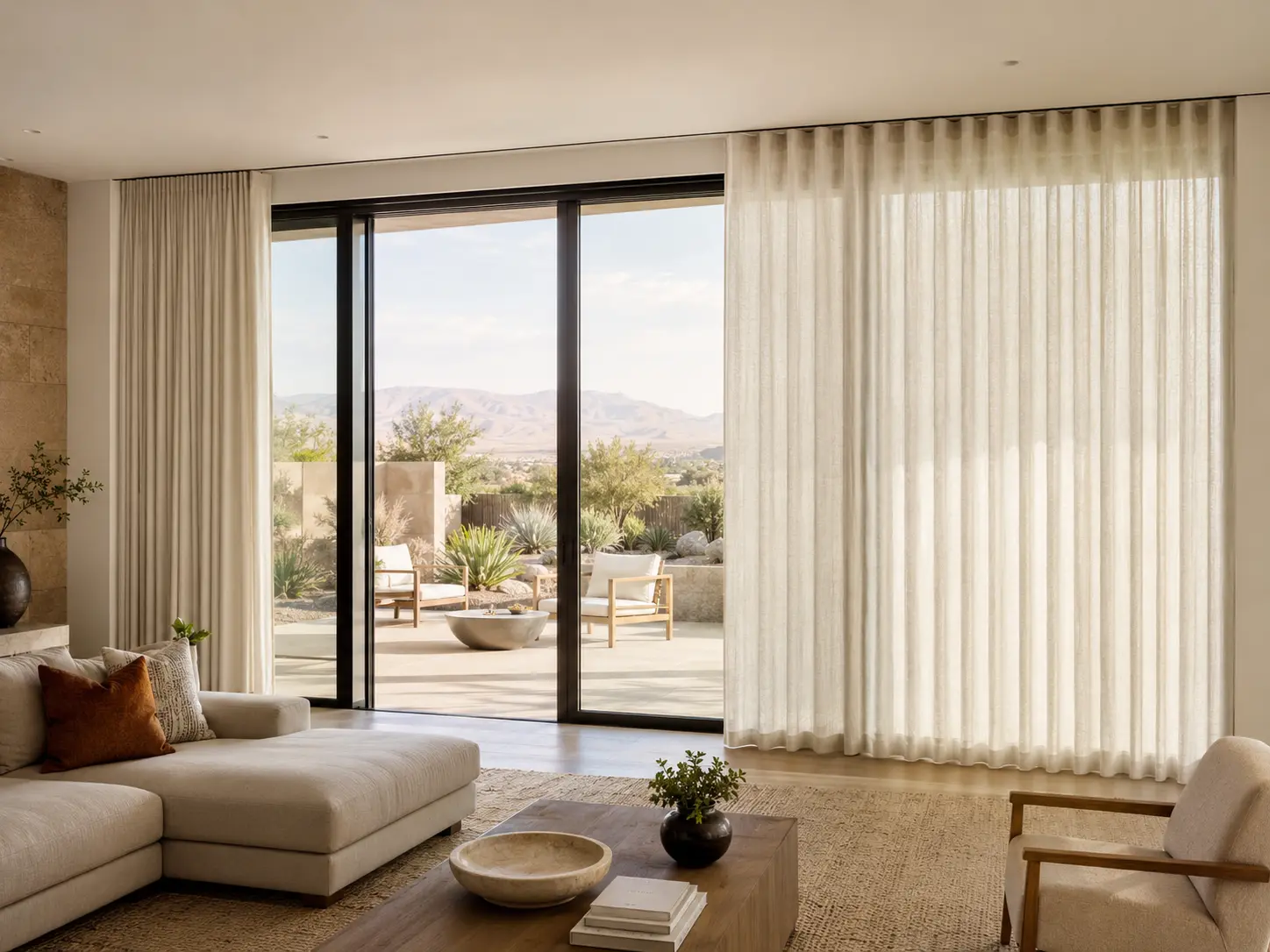
Motorized ripple-fold drapery across a sliding patio door

Product direction

Motorized drapery

Often best for
Patio doors, wide glass, bedrooms, layered rooms
Design feel
Soft and architectural
Light approach
Sheer, lined, layered, or room-darkening directions
Important tradeoff
Needs fabric stack and track space
Explore motorized drapery
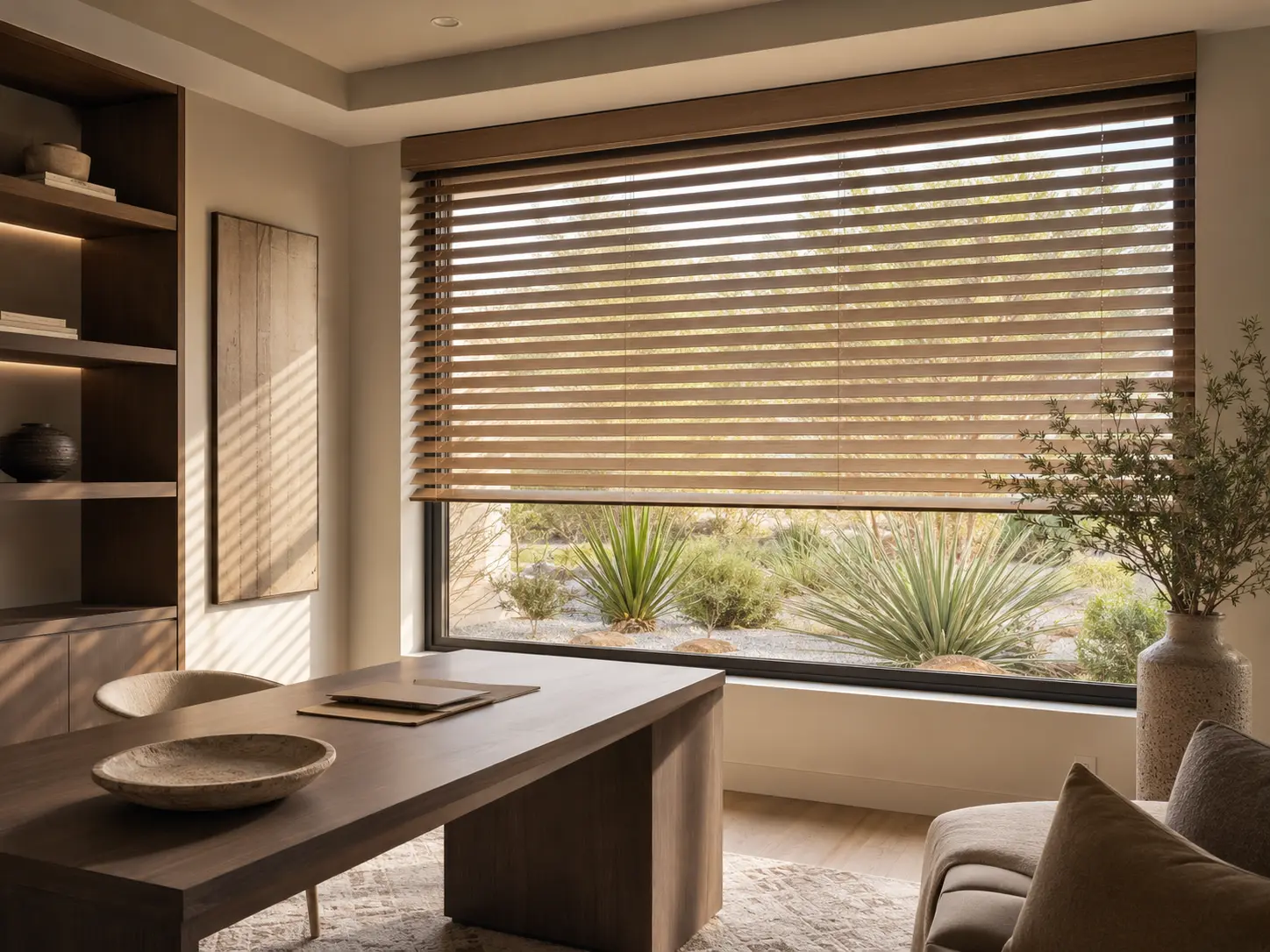
Motorized horizontal wood blinds in a refined interior

Product direction

Wood & faux-wood blinds

Often best for
Adjustable slat light, offices, familiar interiors
Design feel
Structured and classic
Light approach
Tilt redirects light and adjusts privacy
Important tradeoff
Many systems power tilt rather than full lift
Explore wood & faux-wood blinds
Architectural window wall representing motorized shutter control

Product direction

Motorized shutters

Often best for
Powered louver tilt and built-in architectural presence
Design feel
Substantial and permanent
Light approach
Louvers rotate for privacy and directional light
Important tradeoff
Panels may still open manually
Explore motorized shutters

A faster way to narrow the field

Let the priority lead.

01

Preserve a view

Begin with solar roller fabrics or adjustable sheer directions, then compare privacy after dark.

02

Create darkness

Compare room-darkening rollers, cellular shades, lined Romans, woven shades, or drapery—with realistic expectations for gaps.

03

Add texture

Look first at natural woven, Roman, or drapery directions where the material should contribute to the room.

04

Cover wide doors

Compare roller systems, powered drapery, and compatible vertical sheer directions around access and stack space.

A premium integrated path

When the system matters as much as the shade.

Lutron automated shading deserves a separate conversation for design-led residences, whole-home lighting and shade scenes, architectural detailing, quiet coordinated movement, and projects where power and controls should be planned early.

Explore Lutron Automated Shades

Straight answers

Questions before you compare samples.

Which motorized window covering is best for large windows?

Roller shades and motorized drapery are common starting points, while the right answer depends on width, height, fabric weight, desired stack, mounting structure, power, and the available product system. Large openings must be measured before a product is promised.

Which product is best for room darkening?

Roller, cellular, Roman, woven, and drapery systems may offer room-darkening materials or liners. The finished result also depends on side gaps, top and bottom light, mounting, and the room itself. Room darkening should not be treated as a universal blackout guarantee.

Do all motorized products work with an app or smart home?

No. Remote, app, schedule, voice, and integration capabilities depend on the exact motor, interface, and control ecosystem. Product and control components should be selected as one compatible system.

Can different products be used in the same home?

Yes. A thoughtful plan may use rollers in a great room, cellular shades in bedrooms, drapery at a patio door, or coordinated cordless products in lower-priority rooms. Materials, colors, controls, and sightlines can still be coordinated.

The comparison becomes real at your windows

See materials, movement, and controls in the rooms they need to serve.

Your designer brings relevant samples, reviews the openings and power conditions, and creates the exact product and control plan before you decide.

Schedule a Designer