 Las Vegas Motorized Shades
Motorized wood & faux-wood blinds
Familiar horizontal light control, with powered tilt considered carefully.
Wood and faux-wood blinds bring structured horizontal slats, adjustable view and privacy, and a broad finish range—with motorization most often explored for convenient tilt and coordinated light control.
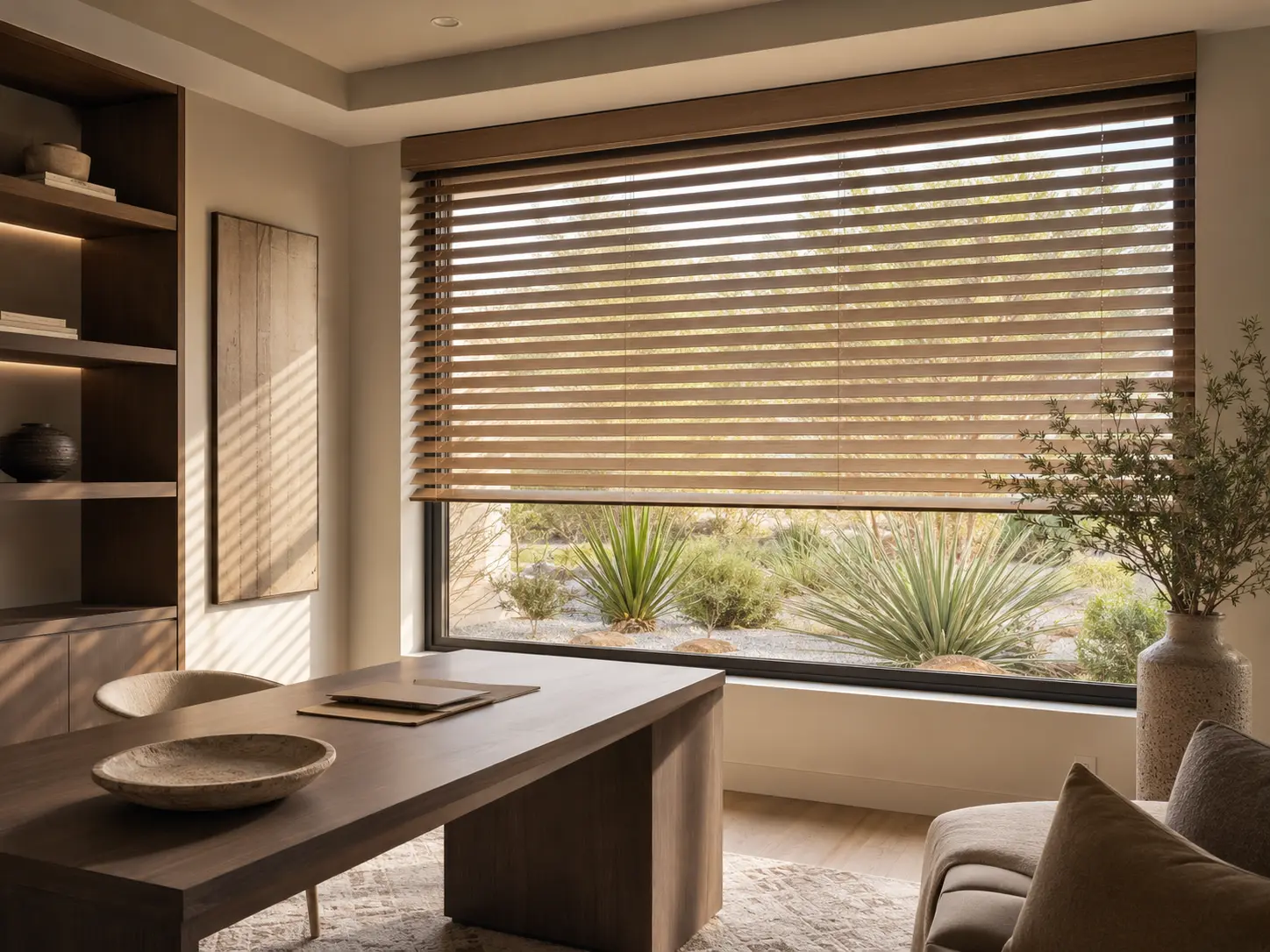 Preliminary inspiration · final product confirmed in your home
Our point of view
Motorized Wood & Faux-Wood Blinds should solve the room—not merely add a motor.
Motorized blinds should be described precisely. A powered system may automate slat tilt while raising the entire blind remains manual or unavailable at certain sizes. That can still be useful for glare and privacy, but the homeowner should know exactly what moves, how it is powered, and what access is required before choosing the product.
Why consider motorized blinds
What this direction can bring to the home.
Adjustable horizontal light
Tilting the slats changes privacy, glare, and the direction of daylight without fully uncovering the window.
Wood or performance material
Real wood offers natural grain and finish character; faux wood can offer a more durable, easy-care direction in compatible applications.
A familiar visual language
Horizontal blinds suit homes where structured slats feel more natural than a continuous fabric shade.
Convenient repeated tilt
Powered tilt may make daily light adjustments easier across a room or on windows that are awkward to reach.
Know what moves
Motorized tilt is not the same as motorized lift.
Some systems rotate the slats but do not raise the blind automatically. Other capabilities may be limited by size, weight, product, or motor. The exact operating behavior should be demonstrated and documented.
Wood versus faux wood
Material affects weight, care, and appearance.
Wood brings natural grain and a furniture-like finish. Faux wood may suit humidity, cleaning, or budget priorities, but can be heavier. Large windows and door applications require careful size and support review.
Slats, ladders, and light
Horizontal blinds manage light rather than sealing it out.
Slat width, rout holes or alternative ladder systems, edge gaps, finish, and tilt angle affect privacy and light. They are not usually the first product for a true room-darkening objective.
Room-by-room thinking
Where motorized blinds may make the most sense.
These are starting points. Window conditions, fabric, exposure, power, and daily use still determine the final direction.
Home offices
Fine-tune screen glare while keeping a structured, professional look.
Bedrooms
Adjust privacy and daylight with a familiar horizontal product.
Kitchens
Consider easy-care faux-wood directions where conditions and clearances allow.
Traditional interiors
Coordinate stained or painted slats with millwork and furnishings.
Before you choose
Design the ownership experience too.
Ask how the shades are powered, controlled, recharged or serviced; what happens if a motor or control stops responding; and who supports the system after installation. Exact answers belong to the selected product—not a generic promise.
Explore easy-recharging considerations →A useful comparison
Want the entire treatment to disappear more fully?
Roller shades lift into a compact top treatment and may be better for broad glass, solar fabrics, or a cleaner minimal profile.
Compare roller shades →Straight answers
Questions about motorized blinds.
Do motorized blinds raise and lower automatically?
Not always. Many motorized blind systems focus on powered slat tilt. Lift availability depends on the exact product, size, weight, and motor, so the movement must be confirmed before purchase.
What is the difference between wood and faux-wood blinds?
Wood offers natural grain and generally lighter slats, while faux wood can provide a durable, easy-care direction but may be heavier. Exact performance varies by collection.
Are motorized blinds good for room darkening?
Tilting slats can manage light and privacy, but rout holes, slat overlap, edge gaps, and reflected light remain. A shade with room-darkening fabric may be a better comparison for bedrooms or media rooms.
See the difference at your windows
Compare real materials, controls, and movement in your home.
Your designer brings relevant samples, reviews the rooms, confirms the technical details, and provides the exact plan and price.