Solar roller shades
Often the first comparison for broad glass when glare control and daytime view matter. Openness, color, backing, and the exact fabric affect performance.
 Las Vegas Motorized Shades
Energy efficiency · product guide
A product that protects the view is different from one designed for stronger insulation or darkness. We compare the fabric, construction, fit, and control strategy around the room instead of naming one universal winner.
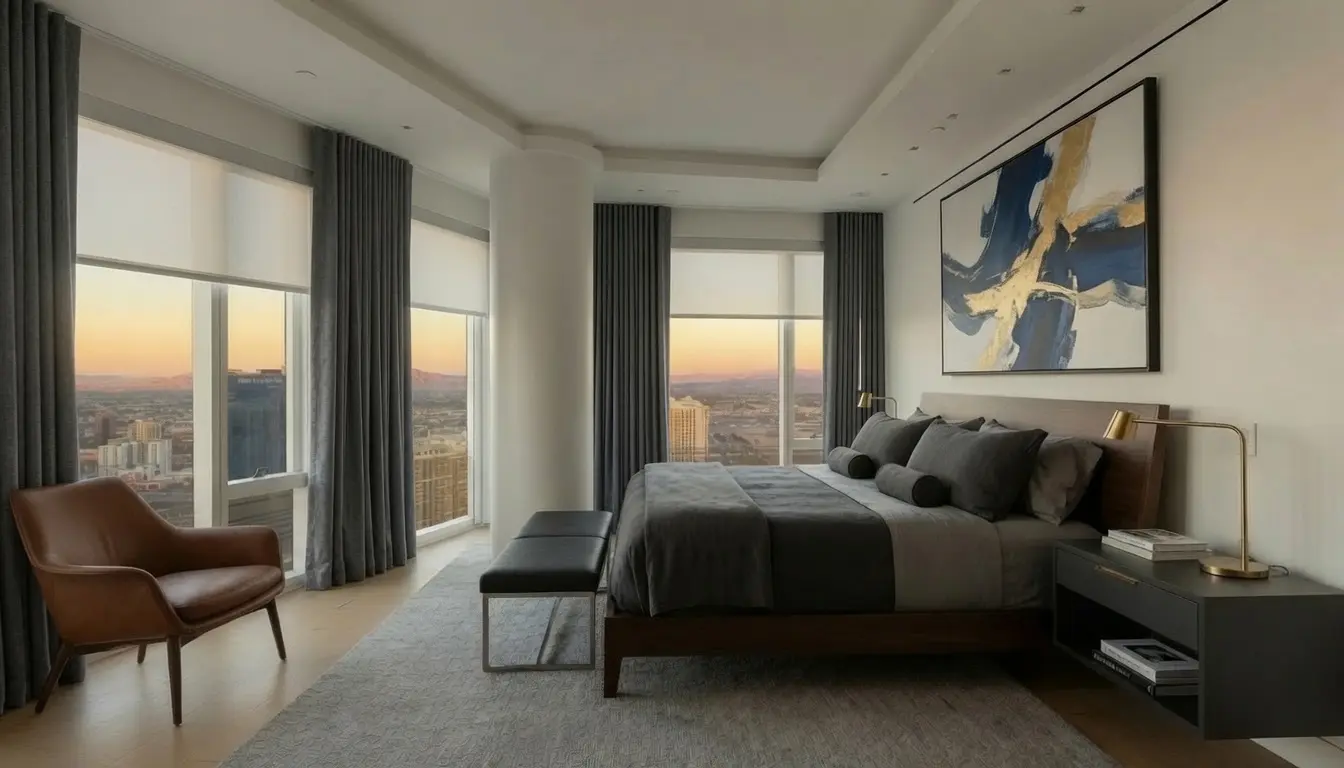
Our professional opinion
What has to work together
Often the first comparison for broad glass when glare control and daytime view matter. Openness, color, backing, and the exact fabric affect performance.
Honeycomb construction creates insulating air pockets and can be a strong direction for bedrooms, offices, and windows where thermal performance matters.
Useful for sleep and media rooms. Darkness, edge gaps, fabric choice, fit, and heat performance are related but not identical decisions.
A solar or room-darkening shade can sometimes be paired with drapery or another compatible treatment, but available depth, weight, power, and mounting must be checked.
Solar roller shades can soften glare and reduce direct solar exposure while keeping more connection to the outdoors. A more open fabric preserves more view; a tighter weave generally increases privacy and solar control. Color and backing also change the balance.
Cellular shades are designed with air pockets that improve the window attachment’s thermal performance. Product construction and fit matter, so we compare the actual shade and available performance information rather than assuming every honeycomb fabric performs the same.
A blackout or room-darkening material can make a bedroom or media room more comfortable, but fabric alone does not guarantee total darkness or a specific energy result. Side gaps, sill conditions, headrail details, and installation all affect the experience.
Wide sliders and two-story windows create questions about shade weight, motor torque, tube deflection, fabric alignment, power, access, and service. Heat control is important, but the treatment also has to operate reliably at that scale.
A west-facing great room may need solar roller shades and schedules. A primary bedroom may call for room darkening. A home office may benefit from cellular insulation and controlled daylight. The products can coordinate visually without being identical.
Questions we ask before ordering
Research & independent ratings
We use independent research to understand potential and compare products, then interpret it around the windows and priorities in your home. Controlled studies do not predict the exact performance or utility savings of a particular household.
Research on cellular shade thermal performance and comfort.
Opens official source ↗Attachments Energy Rating CouncilSearchable technical ratings for eligible window attachment products.
Opens official source ↗Straight answers
They solve different priorities. Solar shades are often useful for glare and view across large glass. Cellular shades add insulating construction. The window, exposure, room, and desired view determine the better direction.
Fabric color, openness, backing, and construction all affect solar and visual performance. Darker is not a universal shortcut; we compare the actual fabric data and how it looks from inside and outside.
Not by itself. Light can enter around the edges. Side channels or other details may improve darkness on compatible products, but the window and system have to be reviewed.
Often, yes. Layering can add softness, privacy, and room darkening, but clearances, mounting, weight, stack, motorization, and the design need to be planned together.
Plan it before installation
Your designer will review the windows, how you want to control the shades, how they will be powered, and who will support the system after installation.