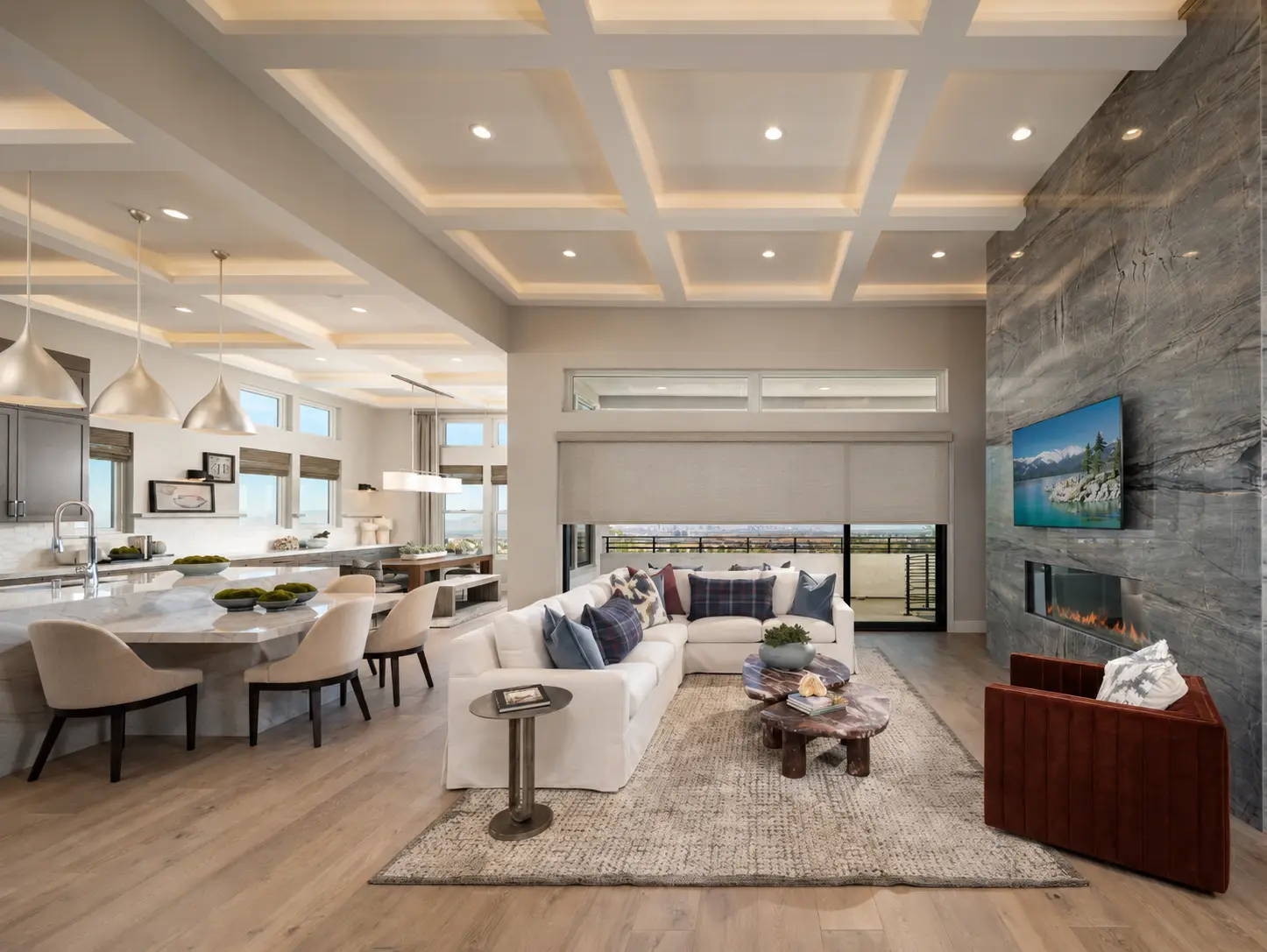
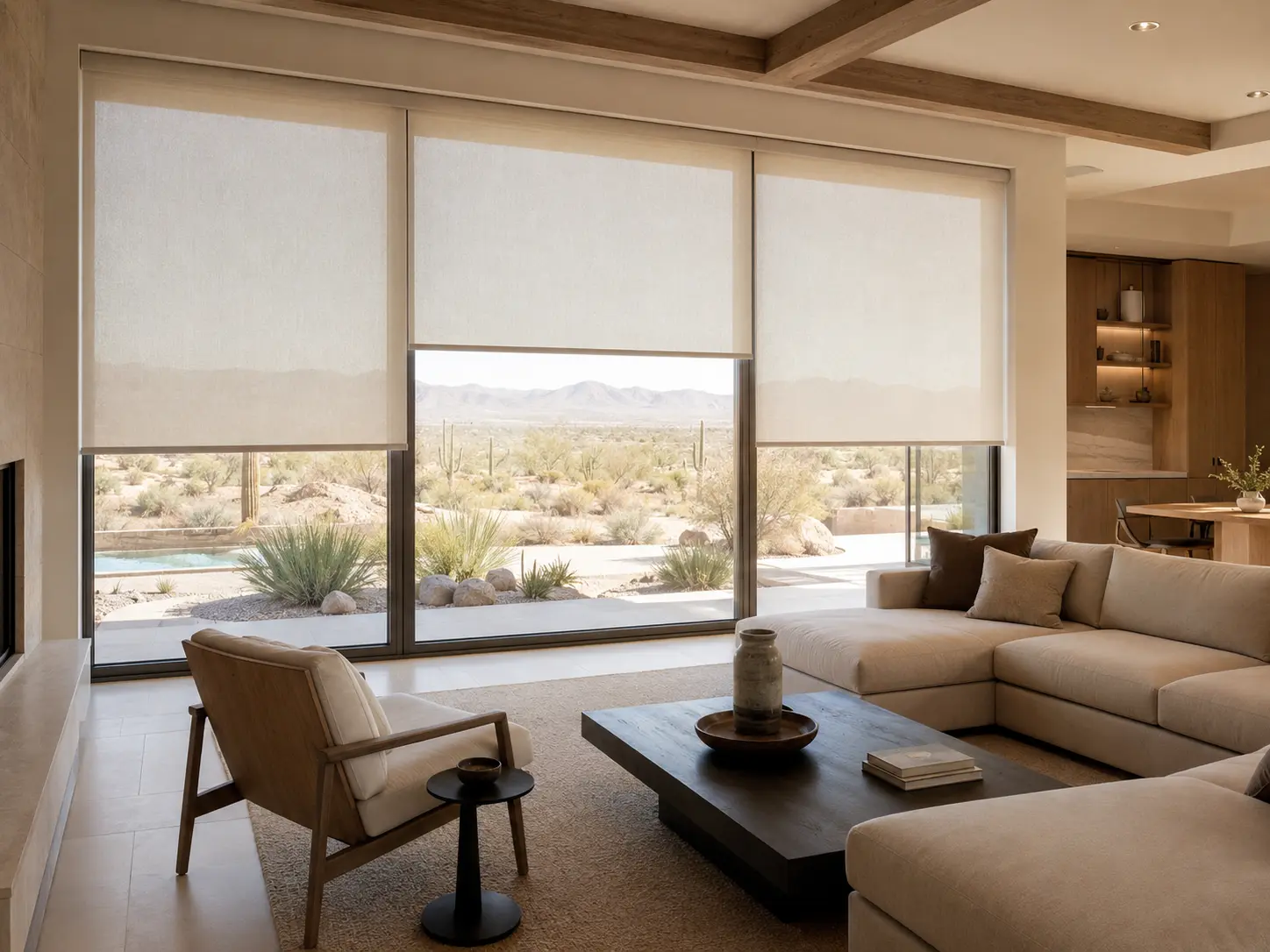
West-facing windows can transform a Las Vegas room in the afternoon. Direct sun, bright sky, reflected light, and long exposures may affect television viewing, computer work, seating comfort, finishes, and the way colors appear. Motorization helps because shades can move before the room becomes difficult to use, but the motor does not determine the fabric performance.
Define what the room must preserve
Decide whether the first priority is reducing glare, retaining the exterior view, adding privacy, creating bedroom darkness, protecting furnishings, or changing the visual softness of the room. One fabric rarely maximizes all of those goals at once.
Evaluate samples in the actual afternoon light
Place full-size or the largest available samples at the window when the exposure is strongest. Compare view-through, surface brightness, reflections on screens, color from inside, and visibility from outside. Glass, overhangs, landscaping, window height, and nearby buildings can change the result from one home to another.

Treat openness, color, and privacy as connected choices
A more open solar fabric may retain more view but generally provides less visual separation. A tighter fabric changes the view and can reduce more visible brightness. Darker and lighter colors can affect view and the appearance of light differently, but exact performance belongs to the selected fabric data, not a broad color rule.
Schedule the exposure, not the whole house
Create a west-window group and lower it shortly before direct sun reaches the problem area. Keep other views open when possible. Review the timing seasonally because the sun angle and the point where light enters the room change through the year.
Plan large shades as an engineered assembly
Wide glass may require multiple shades, a larger tube, a specific motor, or a split aligned with window mullions. Fabric weight, roll direction, top treatment, power, and access all affect the result. Discuss expected light gaps and grouped alignment before ordering.
Set realistic performance expectations
Interior shades can manage light and change the room, but they do not stop all solar energy before it reaches the glass and cannot promise a specific temperature or utility-bill reduction. If heat control is the dominant goal, compare glass conditions, exterior shading where appropriate, and the complete window strategy.
Questions to answer in the home
- When does direct light reach the room's problem area?
- How important is the daytime view?
- What privacy is required after dark?
- Will one shade or multiple aligned shades fit the glass better?
- Can power, charging, and future service be reached?
- Which control and schedule will the household actually use?