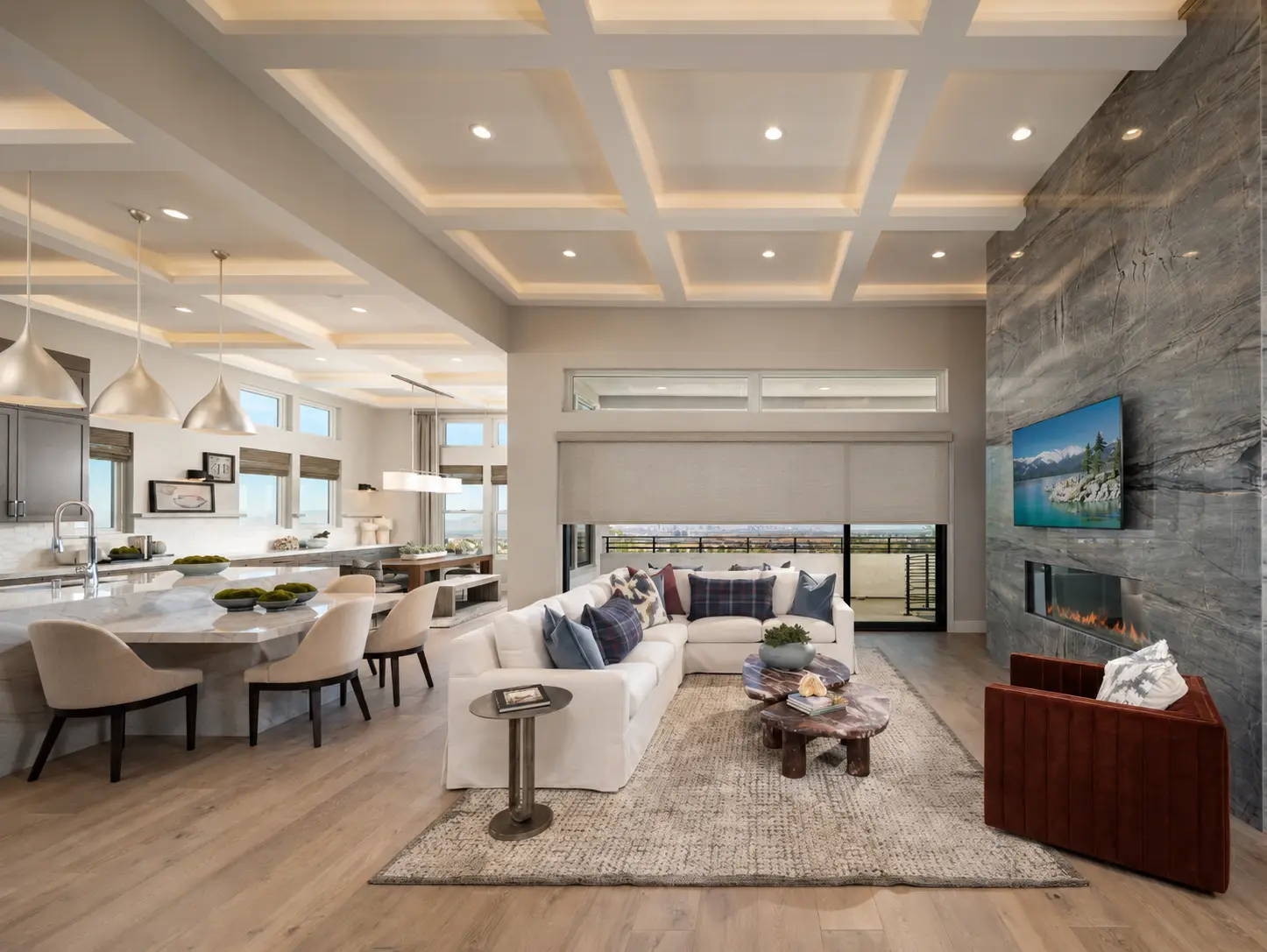
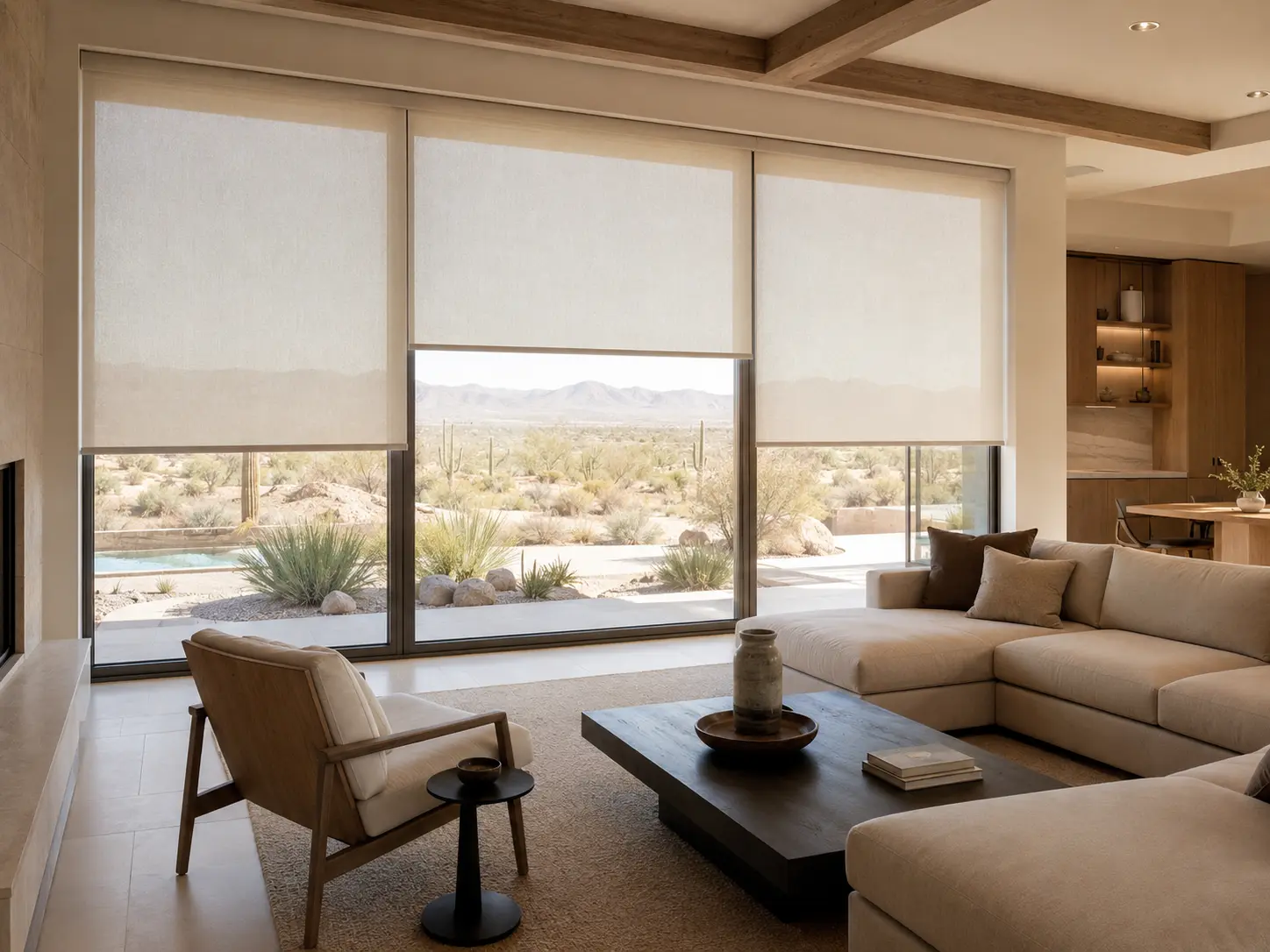
A sliding glass door is both a window and a traffic opening. The treatment has to manage Las Vegas light and privacy without slowing the way people and pets move between the home and patio. Width, handle projection, active panel, wall space, ceiling conditions, and furniture all shape the right answer.
Map the active door and traffic path
Identify which panel opens, where people naturally reach for the handle, and where the treatment will sit when open. A shade should not lower into an active doorway, and drapery should stack where it does not cover the handle or narrow the passage.

Motorized roller shades keep a compact overhead profile
A roller can rise above the opening and preserve floor space. Very wide glass may require multiple shades or a product engineered for the span. Divisions, light gaps, tube size, fabric weight, top treatment, and grouped movement should align with the door and window framing.
Motorized drapery moves with the width of the opening
Drapery can soften a large wall and stack to one or both sides. It needs adequate wall or return space, a track and motor sized for the finished fabric, and a design that keeps the active door clear. Fullness, lining, floor clearance, and stack affect both appearance and operation.
Choose fabric for daytime and nighttime use
An open solar roller may preserve an exterior view during the day but provide less privacy after dark. A privacy or room-darkening material changes the view. Drapery can add a stronger evening layer, and two treatments may be appropriate when daytime view and nighttime separation are equally important.
Place power and controls where traffic will not interfere
Confirm outlet, charging, or hardwired access without cords crossing the door area. A wall control near the normal entry path can be useful, while a remote or schedule can move the treatment before glare or privacy becomes a problem.
Review the completed opening
- Handle and lock clearance
- Active-panel travel
- Shade or drapery stack location
- Pet and child traffic
- Furniture and floor-clearance changes
- Wind entering through an open door
- Local stop or reverse control
- Future cleaning and service access