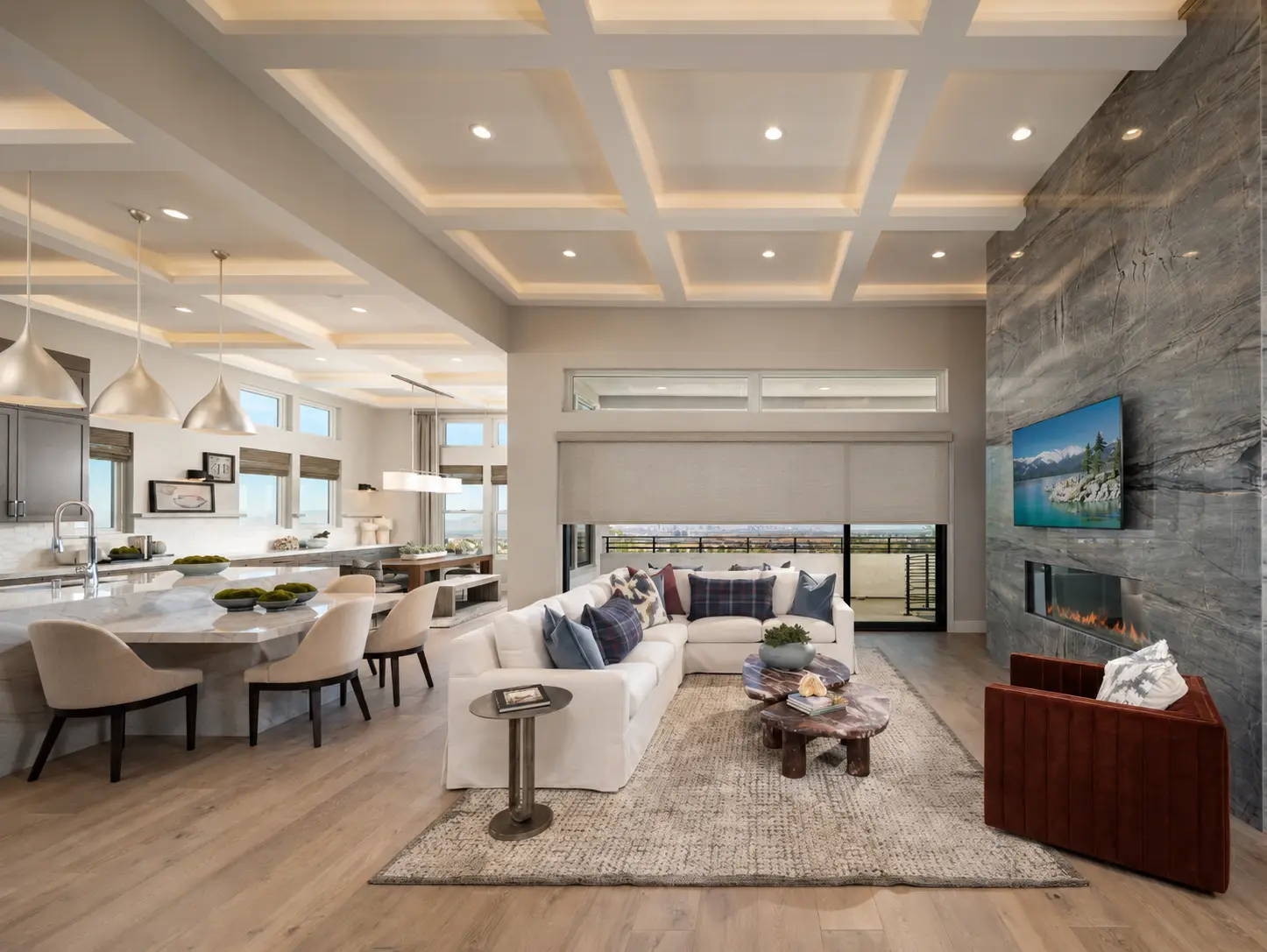
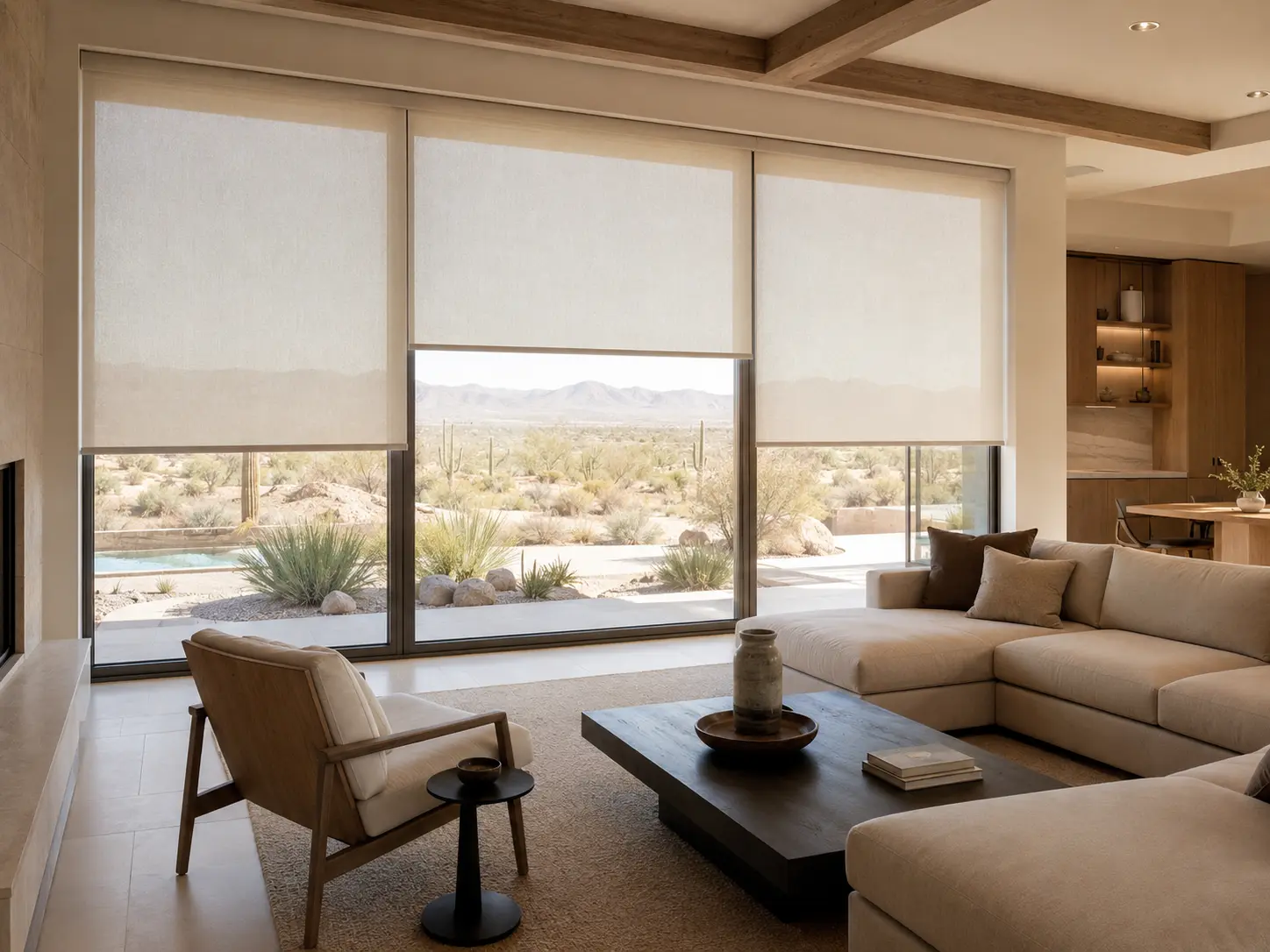
Motorized shades can make morning light feel intentional, but one whole-home open command is rarely the best routine. Bedrooms, bathrooms, street-facing rooms, kitchens, and view windows have different privacy needs and different occupants.
Map how the household actually wakes
List the rooms in the order people use them. A primary bedroom may open gradually after an alarm, common-area shades may open before anyone enters, and a home office may stay closed until direct light is no longer on the monitor.
Separate weekday, weekend, school, and guest routines when the control platform supports it without becoming complicated. If schedules change constantly, a labeled bedside remote may be more useful than another automation.
Protect privacy before opening for daylight
Street-facing and neighboring windows should not open automatically until the room is ready. A solar fabric can preserve daytime view but may not solve every privacy condition. Bathrooms and dressing areas may need their own group or no automatic opening at all.

Choose sunrise events or fixed times intentionally
A sunrise-based event changes through the year; a fixed time follows the household clock. Both can work. Use an offset so shades do not move at the instant of sunrise, and confirm whether the event is stored locally or depends on a bridge, account, or internet service.
Use partial positions when full opening is too abrupt
A favorite position can introduce daylight without fully exposing a room or creating immediate glare. Dual treatments may allow a privacy layer to remain while another treatment opens, but the exact sequence and controls need to be designed with the selected products.
Commission the routine in the room
- Test the event while each room is occupied
- Confirm no privacy-sensitive shade opens unexpectedly
- Keep a bedside or wall control available
- Check that doors and shade paths are clear
- Review timing after seasonal daylight changes
- Leave guest rooms out of the routine unless needed