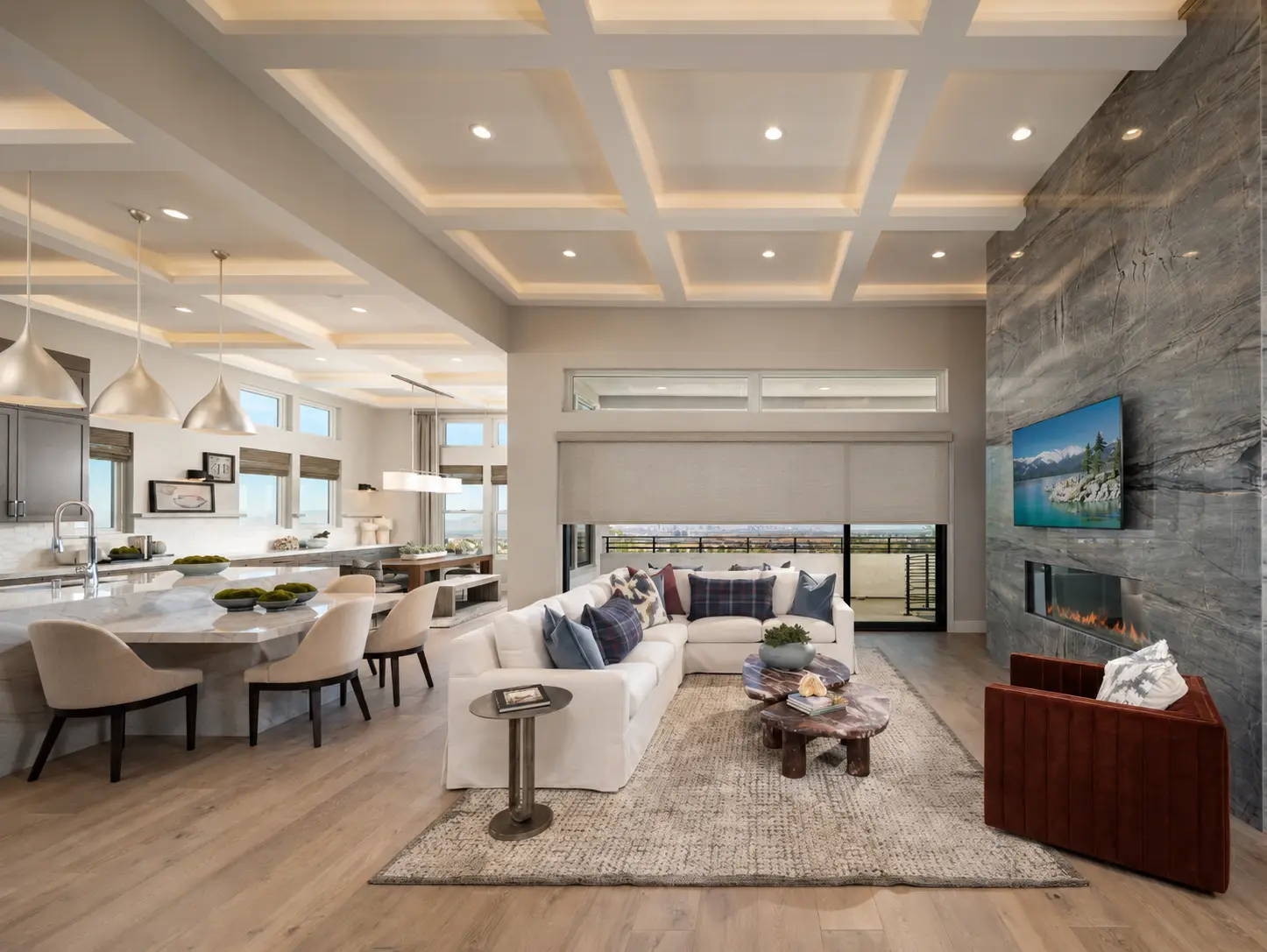
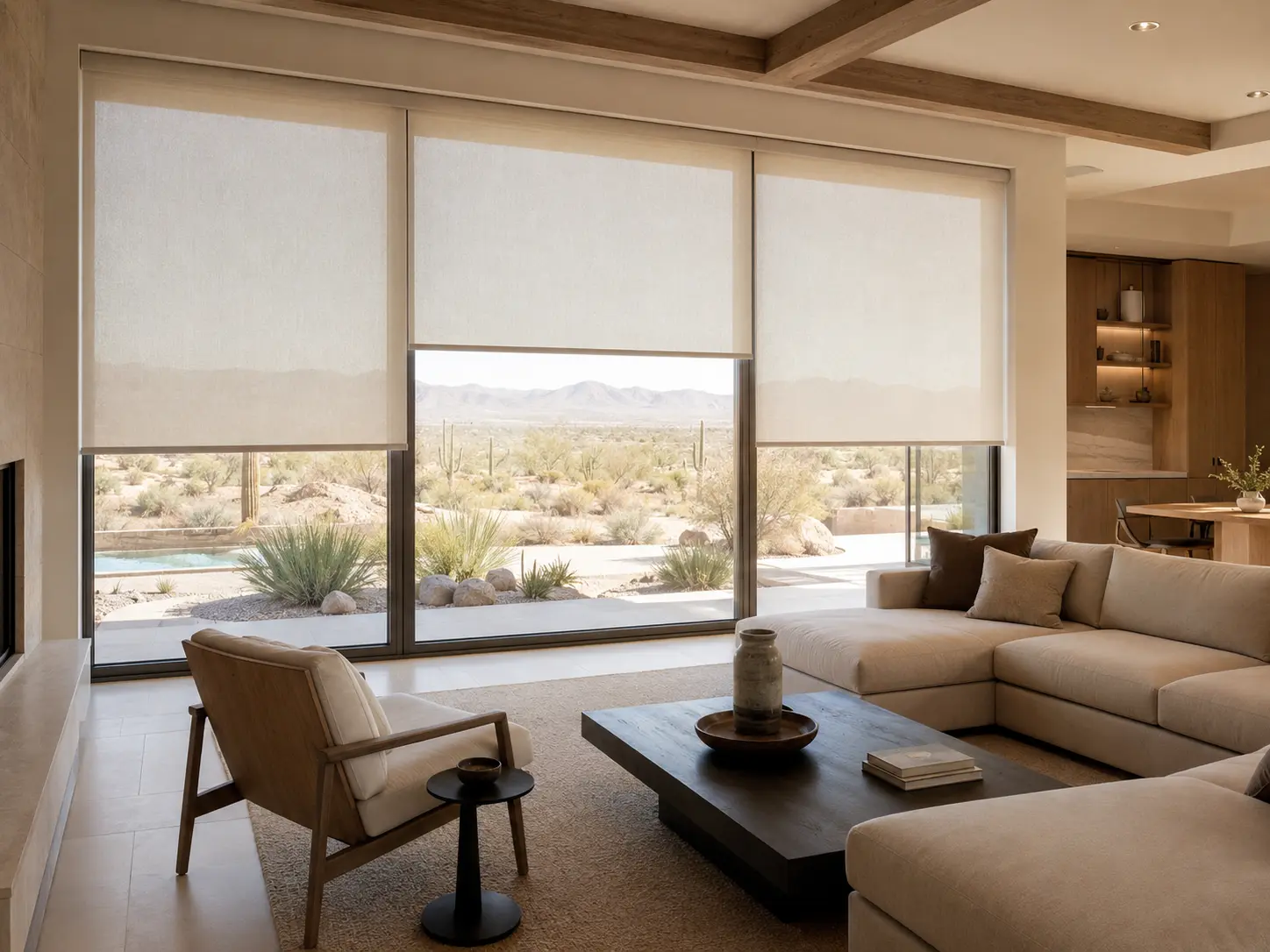
Daytime privacy and nighttime privacy are different lighting conditions. During the day, brighter exterior light can make it harder to see into a home through some solar fabrics. After dark, interior lighting reverses that contrast and may make people, furnishings, and movement more visible from outside.
Evaluate the fabric at night, not only in the showroom
Place the sample at the actual window and turn on the room's normal lamps, recessed lights, and television. View it from outside where appropriate and safe. Fabric openness, color, weave, room brightness, viewing distance, and glass all influence the result.

Match the treatment to the privacy requirement
A tighter privacy or room-darkening roller fabric may be appropriate where view is less important after dark. A layered design can pair a daytime solar shade with a second shade or drapery for evening privacy. Bedrooms may also need attention to side and top light if darkness is a goal.
Schedule privacy before it becomes noticeable
A sunset event with an earlier offset can close selected shades before exterior light fades. A fixed time may better match dinner, occupancy, or seasonal routines. Keep manual control available and separate view windows that the household prefers to leave open.
Group windows by exposure to people, not only by room
Street-facing glass, a neighbor-facing side yard, a high-rise window facing another tower, and a protected backyard view have different needs. One room may need two privacy groups even when the fabrics look the same.
What to confirm before ordering
- Nighttime view-through with the room lights on
- Privacy at standing, seated, and bed height
- Whether side gaps matter for the room
- Which windows close together
- The local override and guest control
- Whether a second layer is needed after dark