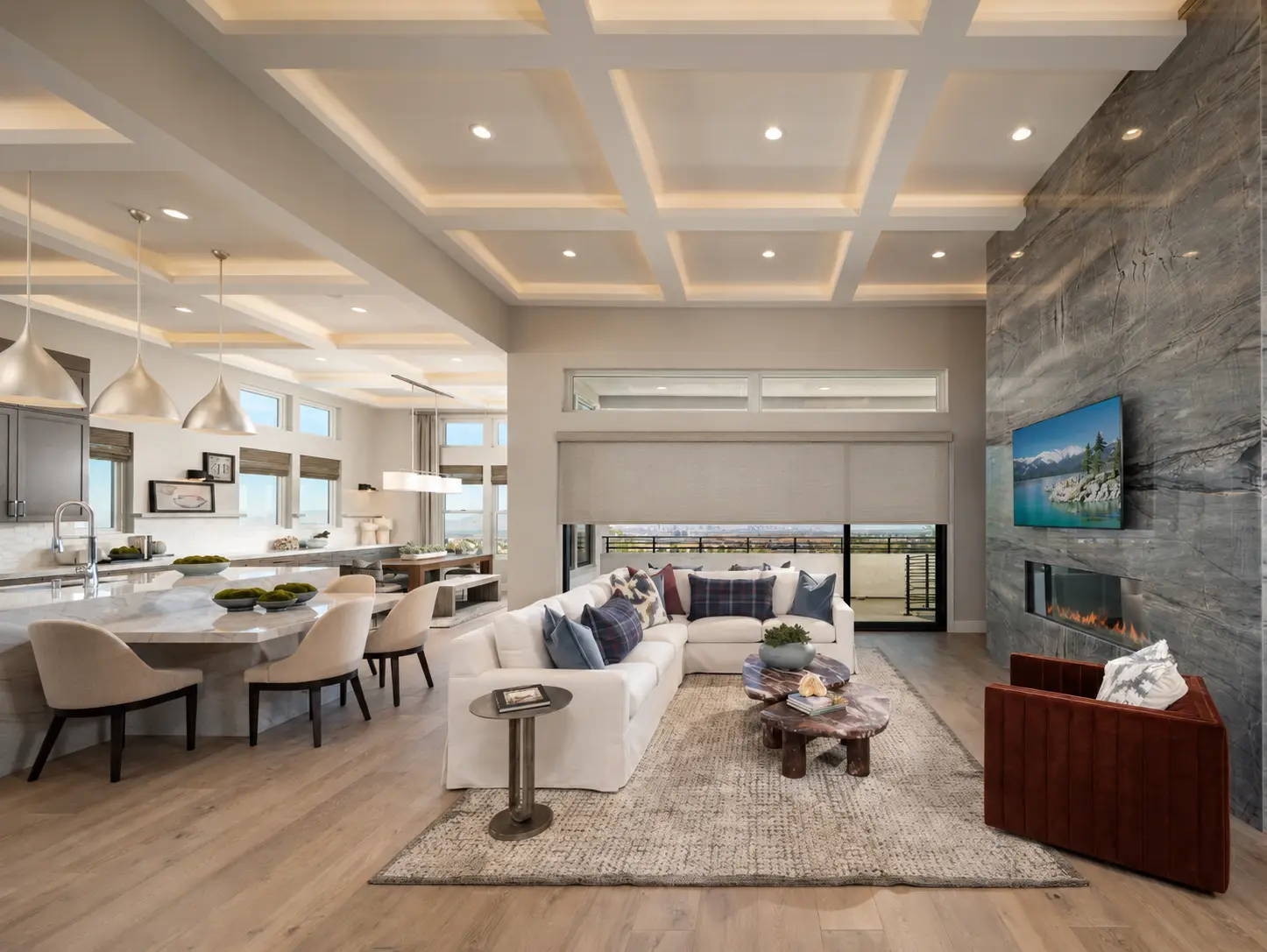
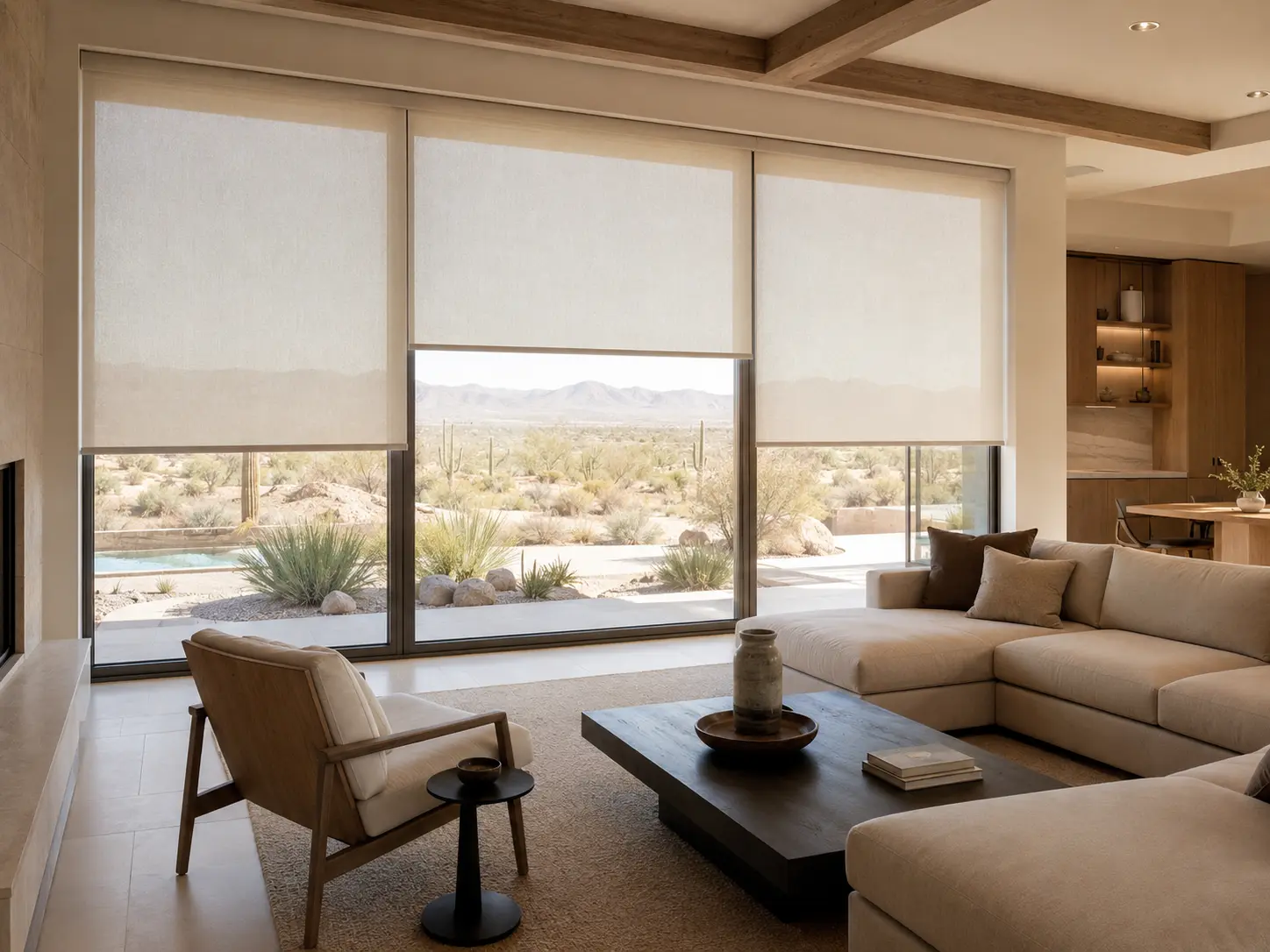
Motorized and cordless window coverings can remove the hanging pull cords and loops associated with many older treatments. That is a meaningful advantage in rooms used by children and pets. It does not make the installation maintenance-free or turn a moving shade into a toy.
The practical plan is straightforward: select a suitable product, keep the shade's travel path clear, put controls where they will not be activated accidentally, and stop using a shade if its movement changes. The exact product instructions and current manufacturer guidance should always govern use.
Keep the full travel path clear
Look at the entire area the treatment crosses, not only the window glass. Cribs, beds, play tables, pet beds, climbing furniture, toys, and décor should not sit where they can press into the fabric or bottom rail. On a sliding door, confirm that the treatment cannot move into people or pets using the opening.

Pets may treat moving fabric as something to chase, especially during the first days after installation. Introduce scheduled movement while someone is present and watch how the animal responds before relying on automatic events.
Place remotes and wall controls intentionally
A remote should have a permanent home that is convenient for adults but not easily triggered during play. If a wall control is used, place it where it is visible and understandable without being in the natural path of furniture or door traffic. Phone and voice control should be secured through the household's normal account and device settings.
Avoid creating voice commands that are easily confused with common phrases. If guests or older children will operate the shades, show them which control moves which window and when to stop.
Begin automation with supervision
Schedules are useful for predictable glare and privacy, but a schedule cannot see a toy, pet, or newly moved piece of furniture. Run new events while someone is in the room until the timing and travel path have been observed. Keep an easy manual stop or reverse control available.
Stop and inspect unexpected movement
Do not repeatedly operate a shade that stalls, tilts, rubs, telescopes, makes a new sound, or meets resistance. Clear only obvious items that can be removed without touching the mechanism, then follow the product instructions or contact the original installer. Do not pull on the fabric or try to force the shade into position.
Choose the complete treatment for the room
Motorization is one part of a child- and pet-conscious plan. Product construction, exposed gaps, bottom-rail weight, side channels, mounting height, door traffic, furniture placement, and the durability and care requirements of the material also matter. A soft fabric treatment and a guided treatment may behave very differently around an active pet.
Questions to review in the home
- Does the selected treatment avoid accessible hanging operating cords?
- Is the full shade path clear of furniture, toys, décor, and pet areas?
- Can anyone accidentally trigger movement from an unsecured remote or voice command?
- Will scheduled events first be tested while someone is present?
- Is there an obvious local control to stop or reverse movement?
- Does everyone know not to pull, climb on, or force the treatment?
- Who should be called if the shade begins moving differently?