
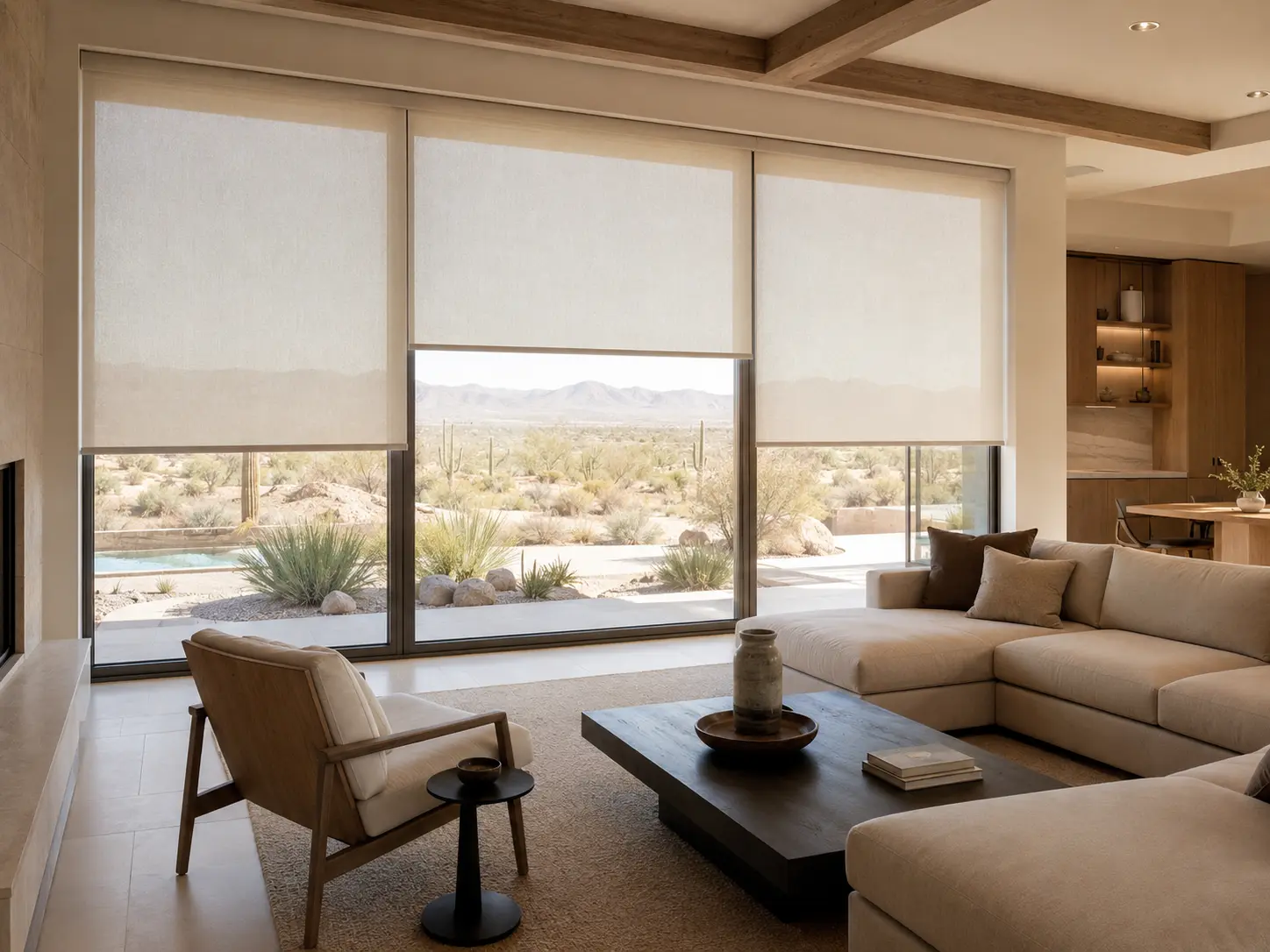
Strong daylight can affect shade fabrics, flooring, furnishings, artwork, and finishes over time. The amount and appearance of change depend on orientation, glass, duration, fabric fiber and coating, color, dye process, interior conditions, and how the shades are used.
Motorization can make consistent light management easier because the shades can lower before repeated exposure. It cannot guarantee that a material or interior furnishing will never fade.
Compare the actual exposures in the home
West-facing glass may receive long afternoon exposure, while east-facing rooms receive earlier direct light. Overhangs, neighboring buildings, window films, landscaping, elevation, and reflected surfaces can change intensity. One fabric choice does not have to be used on every orientation.

Review the selected fabric's written information
Ask for current product data and warranty terms addressing colorfastness, fading, deterioration, dimensional change, and normal wear. Marketing descriptions are not a substitute for the written coverage and exclusions applying to the exact fabric.
Judge color at full scale and in the room
A small swatch can appear different across a large bright window. View the sample against the window, wall, floor, and furnishings at several times of day. Discuss whether a more textured, patterned, or tonal material will show gradual change differently from a flat uniform field.
Use schedules for consistent, not guaranteed, protection
A schedule can lower selected exposures before direct sun reaches sensitive areas. Preserve manual override and adjust timing through the year. If valuable art, flooring, or furnishings require specialized conservation, consult the appropriate material or preservation professional rather than relying on a shade claim alone.
Questions to document
- Exact fabric name, color, and performance data
- Window orientation and strongest exposure period
- Existing glass, film, overhang, or exterior shading
- What the written warranty covers and excludes
- How scheduled operation will be maintained
- Care methods that preserve eligibility
- Who handles a future product claim