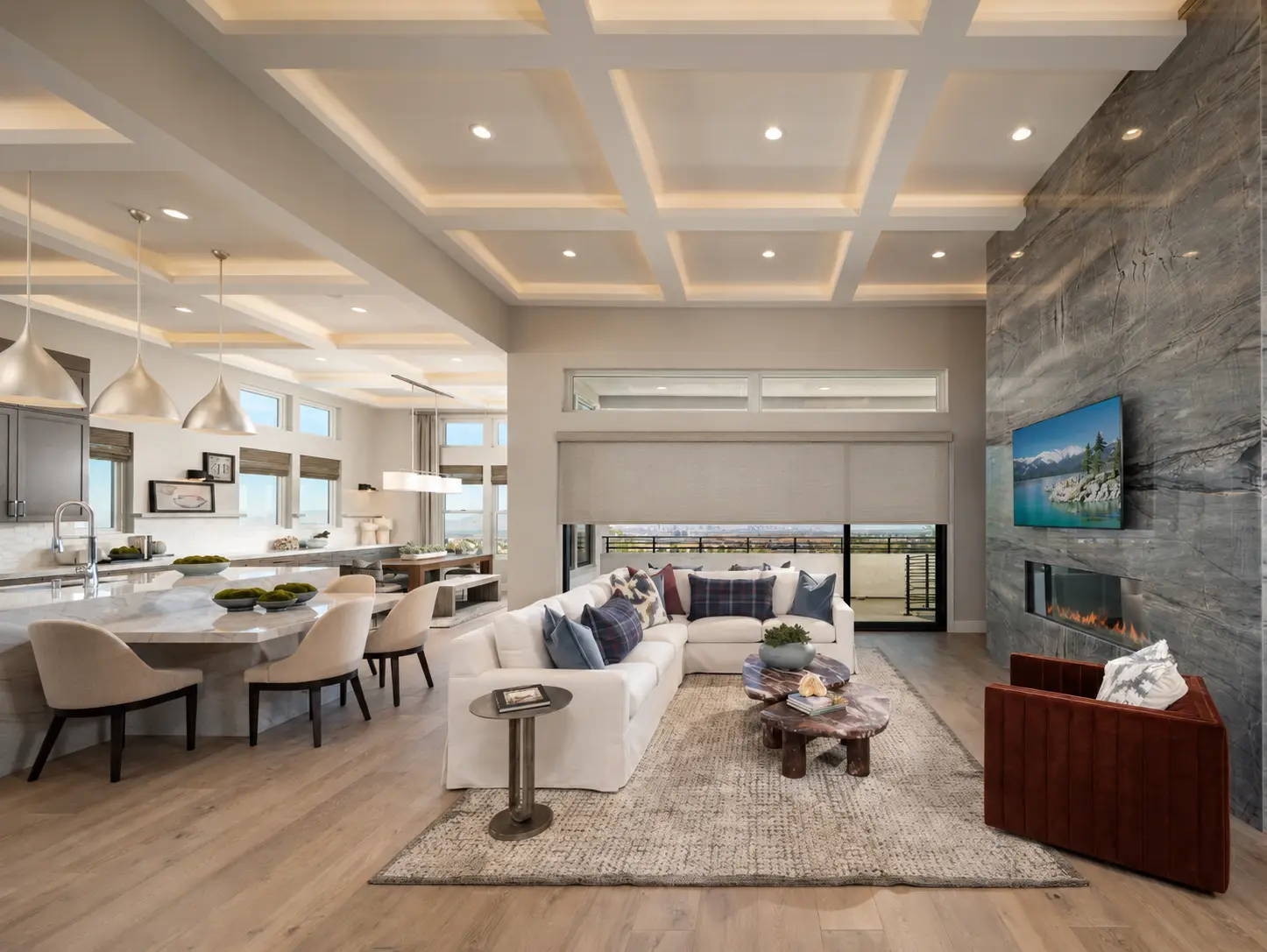
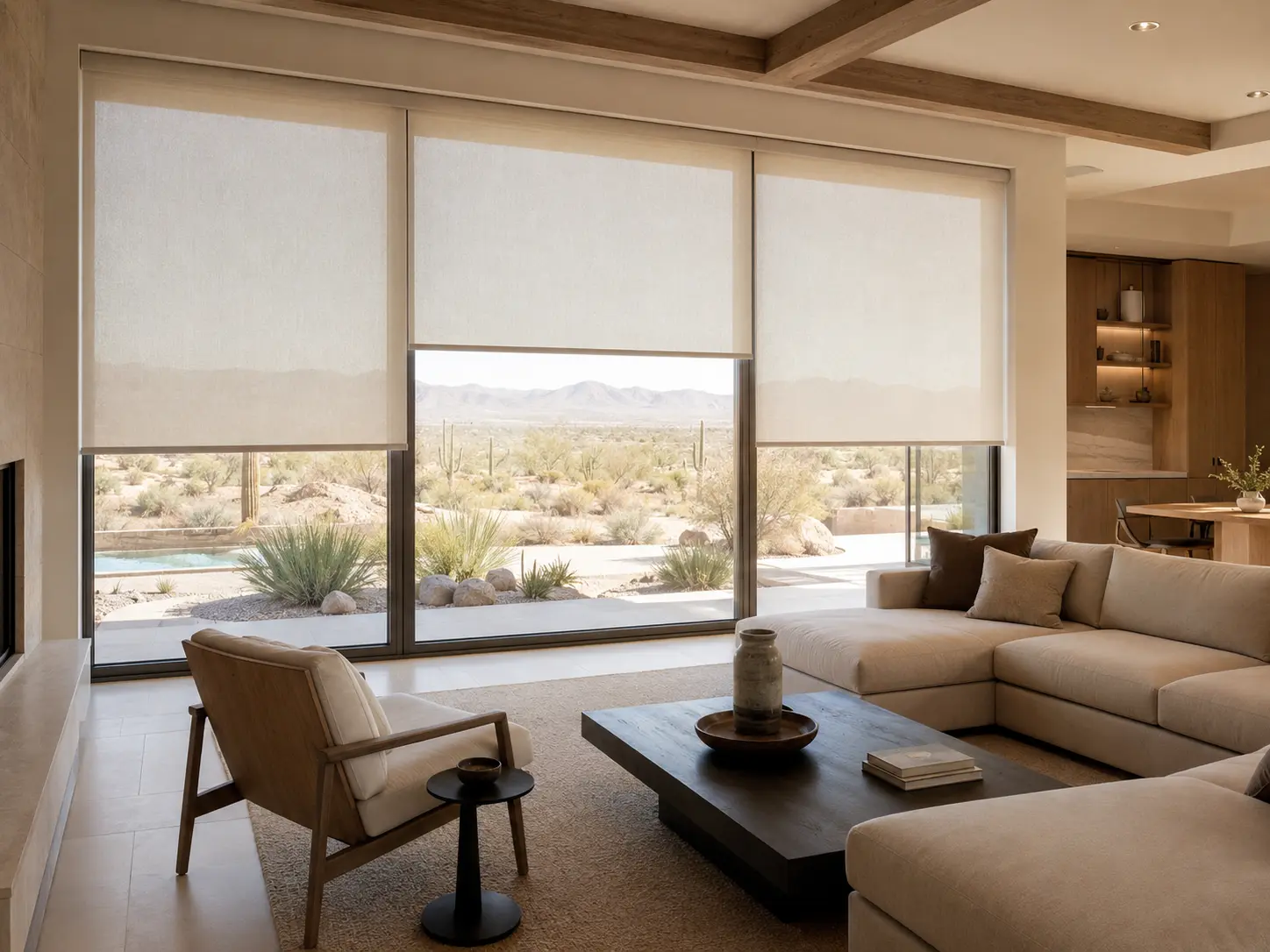
Motorized room-darkening shades can improve a bedroom by closing consistently and removing the need to reach large or high windows. The fabric is only one part of the result. Light can still enter around the sides, above the roll, below the bottom rail, through another window, under a door, or from electronics inside the room.
Define what blackout means for the household
A homeowner reducing early morning brightness may be satisfied with a room-darkening roller and normal installation gaps. A shift worker or light-sensitive sleeper may need side channels, a more enclosed top detail, overlapping layers, and attention to every other light source. Absolute darkness should not be promised from fabric alone.
Compare inside and outside mounting
Inside-mounted shades preserve trim and a recessed appearance but usually have side deductions for hardware and movement. An outside mount can overlap the opening more, although architecture, wall space, projection, and aesthetics may limit it. Measure the actual window and review expected gaps in writing.

Consider channels or layered treatments
Compatible side channels and sill details can reduce perimeter light but add hardware, depth, cleaning, and installation requirements. Drapery or a second treatment can soften remaining side light and improve design. The best approach depends on the opening and the level of darkness expected.
Make control easy from the bed and doorway
A bedside remote or keypad should close the room without a phone. A second wall control near the entry can help guests and daily use. Morning schedules should respect different sleep times and always allow a simple override.
Plan power, charging, and sound for a sleeping room
Keep charging access reachable and chargers out of walking paths. Listen to a working example of the proposed motor and consider the room's quietest conditions. If several shades open together, discuss expected start timing and movement.
Evaluate the complete room
- Side, top, and bottom light at the actual opening
- Light from doors, transoms, bathrooms, and electronics
- Streetlight and sunrise direction
- Bedside and doorway controls
- Schedule timing for each sleeper
- Charging and future service access
- Expected motor sound in the furnished room